
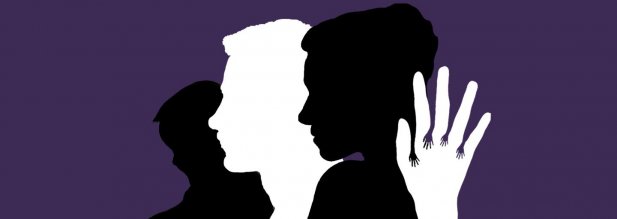

Did you know that without courage there can be no forgiveness? Most of us live in fear. Fear can lead the way to courage, but many do not have the courage to conquer fear. So, how does one win? Have you ever truly forgiven someone for abuse? Not all things can be forgiven and some shouldn't be forgiven at all. This is just one story.
"He was so heavy."
That is what she could remember during our first therapeutic session.
"He was tall."
She remembered that too.
For the longest time, she hated bright rooms in homes because they reminded her of a certain discomfort, but she didn't know exactly what kind or where this discomfort came from.
"It was a sunny bright day. I could see the sunrays come in through the window and hit the apartment floor. I could see some green grass on the other side of the glass too, but it wasn't our apartment. You had to take a flight of stairs to our place. I kept looking to the light and the grass, but my eyes were blurry from tears. Even as a child, I don't remember pain, but what I do remember is a sense of disbelief when looking at his eyes. I remember feeling certain confusion that caused me to pause my crying and double-check that yes, indeed, he was doing what he was doing. I don't remember being afraid, but I do recall being almost sadly disappointed that he, of all people, was weighing down on me. His breath was awful."
This is what she told me during our second session. She was eating her ice-cream at that time. Snotting and crying while gazing hard at the green tree outside the window, made her look pitiful but unquestionably honest. Stress eating.
For thirty years, she picked places with darker walls and she always covered up the windows, but never out of fear that someone could be watching her from the outside. It seemed natural to do so. Often, she clenched her jaw just existing in the world, but she didn't realize that she was doing that until one day she felt completely relaxed for the first time in her life.
One day, she was doodling on a sticky note and out of nowhere she began to write the following words:
"I think I can, I know I can, remember who you were when I was just a child, but when I try to remember who you were to me, all I recall is that you weren't much but heavy and tall. That's all. You were just tall."
For thirty years, she thought she forgave her father for causing her that discomfort in that bright room. Did she really forgive him if these words floated onto paper so naturally and without her active awareness? They floated like a poem as if they have been sitting there for all these years and waiting to come out so that she could finally be free. Why was it out now if she forgave him all this time ago? For the first time, through the words you see written above, she understood that she didn't have to forgive him anymore. He was nothing, but tall! It was OK to just remember that about him and to finally stop making excuses for his actions.
Prior to this realization, she always painted him as someone special and important, but he wasn't that. She just wished he was. Now, she could stop lying to herself and just understand that it's OK to move on and to remember things and to sob and to feel awful. They say "all good things come to an end," but they forget to tell you that all bad things come to an end too. She didn't need to prove anything to someone who was far from a father. He was not an inspiration and she didn't need to make him into one.
After some time, almost no time at all, she was not mad. Allowing herself to never forgive him was the beginning of her healing. Writing down those words so honestly and openly was her way to freedom. She forgave herself for the things she couldn't change. That's what takes courage. Forgiving him would have been the easiest thing to do, but not the most real.
Psychologists, the good ones, tend to listen and give small feedback, but the great ones will tell you that you do not have to forgive anyone who has ever deeply hurt you. When we speak of hurt here, it's very specific. It is the kind that shapes and alters your view on life and often, many women and men, can't wake up from this type of hurt, but some do. Great psychologists will tell you that you must forgive yourself. Not your father, not your mother, only yourself. Your duty is to forgive yourself.
Forgiving others is so easy that you don't have to try. In fact, when we forgive others, we actually don't. What we do is accept their actions and place them far away somewhere in the back of our mind until one day we realize that we haven't lived a life that was meant for us just yet. We have been holding our breath, purposefully forcing the negatives away as far as we can until we actually get physically ill. Did you know that holding secrets of sexual abuse can actually lead to the progression of some cancers? Now you know. How can you truly forgive someone? Well, forgive yourself. Cry! Remember! Share! Get rid of that "nose up in the air, I'm deserving of everything" fear filled pride. Do not be afraid. Do not be afraid. Fear will now be courage and courage will set you free. Do not be afraid of the memory.
Do not forgive your abuser. Forgive the "you" you always knew existed. With this completely different practice of forgiving from the one you have most likely been told to practice, your life will change immediately and in every way that you ever imagined. When you love yourself the right way, others do the same. When you love yourself the right way, life begins.
Forgive yourself for the world and the deeds you couldn't change. Move forward, beautiful. It's time to open the blinds and face the light.
