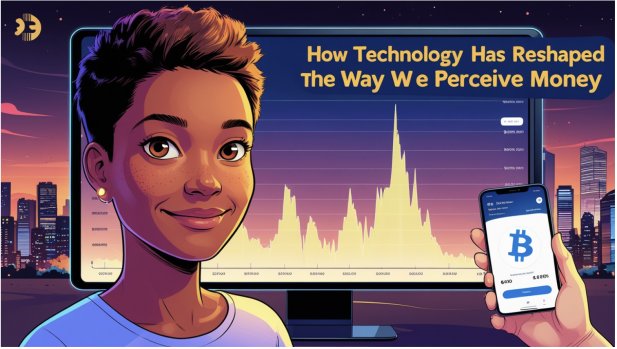

Money has always been at the center of human civilization. From the earliest forms of barter to the complex financial systems of today, the way people exchange value reveals much about the progress of society. Yet, in the last thirty years, the concept of money has changed more than in the previous three centuries. The driving force behind this transformation is technology.
In this article, we’ll explore how technology has reshaped not just how money is handled, but how people perceive and interact with it.
From Physical to Digital: The Changing Face of Currency
The shift from paper to pixels has been one of the most significant transitions in the history of money. A generation ago, most transactions involved physical cash or checks. Today, digital payments, mobile wallets, and contactless cards dominate the landscape.
Interestingly, this shift is not just about convenience. Digital money carries psychological effects. For example, studies show that people are more likely to overspend when using a card compared to handing over physical notes. The tactile experience of money, once central to its value, has been replaced by seamless digital flows.
Trust in Algorithms: Can Code Replace Confidence?
In traditional societies, money was tied to precious metals or government promises. Today, trust has shifted to algorithms and platforms. Cryptocurrencies, digital banks, and algorithm-driven trading platforms illustrate this shift vividly.
The very act of trusting a mobile app with our savings or allowing a trading algorithm to execute financial decisions reflects how people increasingly rely on technology instead of human oversight. What once required an institution with marble halls and human clerks can now be executed by code running on a server.
Technology’s Influence on Financial Behavior
Technology doesn’t just change the mechanics of money; it shapes how people behave financially. Consider the following effects:
-
Speed of Decisions: With instant access to financial markets, people react faster to news, often without full consideration.
-
Illusion of Control: Apps give a sense of control, yet decisions are still influenced by market volatility and external events.
-
Accessibility: Platforms like pippenguin.net provide financial comparisons and resources that were once available only to industry insiders.
This accessibility democratizes finance but also introduces risks. Beginners may enter markets without understanding the depth of their decisions.
Comparing Old and New Perspectives on Money
|
Traditional View |
Modern Technological View |
|
Money is physical, scarce, and tangible |
Money is digital, abundant in flows, and often intangible |
|
Value is trusted through governments and banks |
Value is increasingly trusted through platforms and algorithms |
|
Transactions are slower but deliberate |
Transactions are instant, sometimes impulsive |
|
Education on finance was institutional and exclusive |
Education is online, accessible, and often self-directed |
This table underscores the psychological and practical changes that technology has introduced into how money is both understood and used.
The Cultural Shift: Money as a Digital Identity
Technology has blurred the line between money and identity. Our online profiles, credit scores, and digital wallets collectively represent who we are in the financial world. For many, financial identity is now as important as cultural or national identity. Losing access to a digital account can feel as disruptive as losing a passport.
This raises important questions: is money still a neutral tool, or has it become intertwined with personal freedom and digital reputation?
The Future: Beyond Money as We Know It
Looking ahead, technology may continue to reshape money in radical ways:
-
Central banks are experimenting with digital currencies.
-
Smart contracts could redefine how we view trust in transactions.
-
Artificial intelligence may replace many roles traditionally reserved for financial advisors.
Each development forces us to reconsider what money represents. Is it a medium of exchange, a store of value, or simply an entry in a digital ledger that only holds meaning because we collectively agree it does?
Conclusion
The way people perceive money is no longer bound to coins, notes, or even centralized authorities. Technology has redefined money as both a tool and an experience. It is faster, more global, and more accessible than ever before—but it is also more abstract and, at times, more precarious.
Platforms such as pippenguin.net highlight this shift by making financial knowledge readily available to anyone with an internet connection. Money is no longer just about value; it is about the networks, systems, and technologies that hold it together.
The real question is not whether money will continue to change, but whether society is ready to embrace its next form.