
You open your KitchenAid refrigerator, and boom—warm milk, soft butter, and a weird smell that wasn't there before. That's frustrating, right? You bought this fridge expecting it to work. Yet here you are, wondering why it's not cooling like it should.
So what's going on? Well, there could be several culprits. For instance, it might be blocked vents, dirty coils, or even a failing thermostat. In some cases, it's the compressor. Either way, you may need fast kitchenaid refrigerator repair Orange before your food goes bad.
Blocked Air Vents Are Choking the Cool Air
Let's kick things off with airflow. Your fridge depends on proper airflow to stay cool. So, when vents are blocked, cold air can't circulate. As a result, warm spots form fast. And yes, that's probably why your milk isn't as cold as it should be.
Here's what causes blocked vents:
- Overpacking shelves with food
- Large containers were shoved near the back
- Frozen moisture is blocking the path
Therefore, take a few minutes to reorganize things. Move large items away from the back wall. Leave some space between containers. And always check if plastic bags are accidentally covering the vent.
Dirty Condenser Coils Are Working Against You
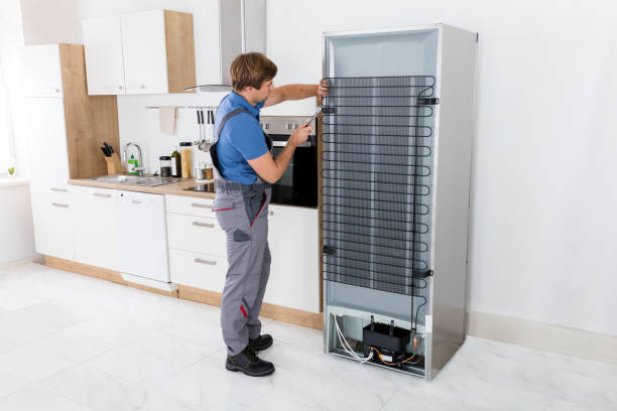
Now let's talk about those coils hiding under or behind your fridge. They're supposed to release heat. However, when they're dirty and covered in dust, they trap heat instead. Eventually, this forces the compressor to work overtime—leading to poor cooling or a total shutdown.
Here's how to clean them:
- Unplug your fridge first.
- Locate the coils (usually in the back or bottom).
- Use a vacuum or coil brush to remove dust.
- Do this at least twice a year.
If cleaning doesn't help, then something deeper could be wrong. In that case, reach out for kitchenaid refrigerator repair Orange before things get worse. Also, remember that cleaner coils mean better energy efficiency. Therefore, this simple task not only helps with cooling but also saves money.
Your Thermostat Might Be Lying to You
Next, let's check your thermostat. It controls your fridge's temperature. But if it malfunctions, it may think the fridge is cooler than it actually is. So even though you've set it to chill, it might not respond properly.
Try this test:
- Turn the dial to the coldest setting.
- Wait and listen for a clicking sound.
- If there's no click, then it isn't very accurate.
Also, it helps to place a separate fridge thermometer inside. Compare the readings. When in doubt, don't guess. A quick service can swap out the thermostat quickly—before it causes bigger issues.
Evaporator Fan Not Spinning? No Cool Air For You
Another common issue is the evaporator fan. This tiny fan moves cold air from the freezer to the fridge. But when it stops spinning—or gets stuck—you'll definitely notice uneven cooling. So if your freezer is still cold, but the fridge isn't, then this could be your problem. Although some people try to DIY this fix, it's not always safe. Therefore, if you're not used to handling electrical parts, call a kitchenaid refrigerator repair Orange to handle it. They can diagnose and replace the fan without causing more damage.
Warning Signs:
- Weird humming or rattling noises
- No airflow from the freezer
- Ice buildup near the back panel
Your Compressor Could Be Failing
Next, let's talk about the big one—the compressor. This is the engine of your refrigerator. It compresses refrigerant to keep things cool. However, when it fails, your fridge becomes just a fancy cabinet. Although it sounds scary, not all compressor issues require full replacement. Sometimes it's just a faulty start relay. But either way, you'll need a trained technician. That's where LG dryer repair North Tustin comes in handy. They can quickly test the compressor and let you know what's going on.
Signs of a bad compressor include:
- Clicking sounds without the hum
- Fridge not cooling at all
- Silence from the back of the unit
Temperature Settings Are Way Off
This one's simple—but sneaky. Sometimes the fridge settings accidentally get changed. Maybe someone leaned on the control panel. Maybe the power went out. Either way, wrong temperature settings can cause big problems.
Here's what to do:
- Check the fridge: set to 37°F.
- Freezer: set to 0°F.
- Reset settings if they look off.
Also, don't forget that some settings take hours to update. Therefore, give it time before you panic. Funny enough, this happens with dryers, too. Off settings are a common issue in LG dryer repair calls as well. So always double-check your appliance panels!
Door Seals Could Be Letting the Cold Escape
Your fridge door seal is like a lock. If it's weak, cold air slips out—and warm air gets in. As a result, your fridge overworks itself and still can't stay cool.
Do this dollar bill test:
- Close the door on a dollar bill.
- Try to pull it out.
- If it slides out too easily, your seal is worn.
Signs your seal needs LG dryer repair North Tustin:
- Visible cracks or fraying
- Black spots or mold
- Moisture or sweat on the outer edges
- The door feels loose or bouncy
Although it seems minor, this tiny strip of rubber is super important. So, replacing it can dramatically improve performance. Also, it's one of the cheapest KitchenAid refrigerator repair tasks—so don't delay it!
Power Supply or Control Board Issues
Finally, let's look at power. If your fridge has no power or inconsistent cooling, the control board could be failing. In fact, a faulty board can confuse sensors, disrupt fans, or shut down the compressor altogether.
Let's break it down:
|
Problem |
Cause |
Solution |
|
No lights |
Blown fuse or loose plug |
Check the power source |
|
Intermittent cooling |
Faulty control board |
Needs tech evaluation |
|
Silent fridge |
Dead relay or wiring |
Call for repair |
Also, unstable home voltage can mess with other appliances, too. So if your LG dryer repair technician spotted weird behavior, your fridge may not be far behind. Therefore, don't ignore power problems. They often lead to deeper issues if left untreated.
Conclusion
A KitchenAid refrigerator not cooling is more common than you think. However, the reasons vary—from blocked vents and dirty coils to bad fans or a dying compressor.
Therefore, always start with easy fixes. Reorganize the fridge. Clean those coils. Check the settings. But if nothing works, it's time to call for Complete Appliance Repair. Everything's connected!
At the end of the day, keeping your fridge cool means less stress, fresher food, and no surprise science experiments in your vegetable drawer. You've got this!