
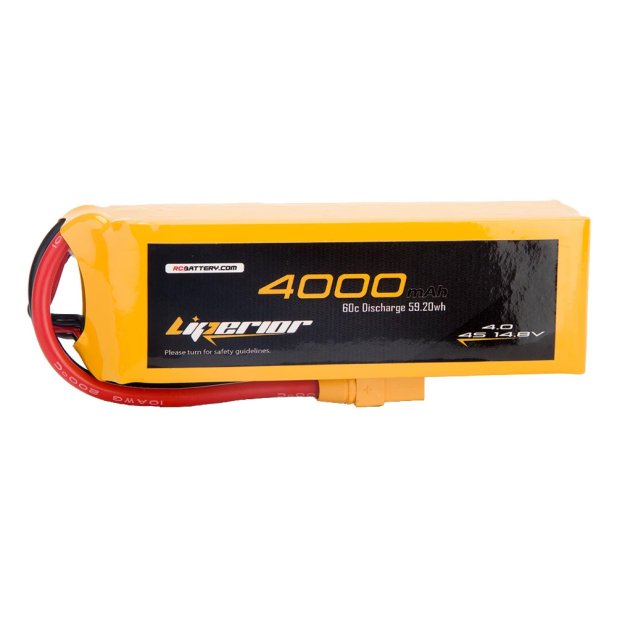

In the fast-paced world of RC racing, every millisecond counts. Power, consistency, and battery efficiency can make the difference between crossing the finish line first or lagging behind. Among the countless upgrades available, the 4S LiPo battery is often the beating heart of an RC racer’s setup. However, a growing question looms: Are budget 4S LiPo batteries good enough for serious racers, or are they just a risky compromise?
Let’s break down the truth behind these affordable power packs — from how they perform under pressure to whether they’re truly worth your hard-earned money.
1. Understanding the Basics: What Makes a 4S LiPo Battery Special
What Does ‘4S’ Mean?
The term “4S” refers to a LiPo (Lithium Polymer) battery made up of four cells connected in series, providing a nominal voltage of 14.8V. This configuration strikes an ideal balance between torque, speed, and control — perfect for high-performance RC cars, trucks, and drones.
C-Rating and Capacity Explained
The C-rating determines how fast the battery can discharge energy. A higher C-rating means greater burst power and faster acceleration. Budget 4S LiPos often come with inflated C-ratings, meaning they might not deliver the full potential stated on the label. For instance, a “100C” budget pack may perform closer to a premium “60C” battery.
Internal Resistance and Quality Build
One major differentiator is internal resistance (IR). Lower IR means less heat generation and better voltage stability. Premium LiPos usually use matched cells with lower IR, while budget ones often have uneven chemistry — leading to quicker degradation and voltage sag under heavy load.
2. The Allure of Budget 4S LiPo Batteries
Why Racers Choose Budget Options
Budget 4S LiPos are popular because they’re affordable, easily available, and often come with similar specs to premium brands — at half the cost. For beginners or casual racers, that’s an irresistible deal.
Price vs. Performance
However, the price gap often reflects build quality. A top-tier pack from brands like Gens Ace or Turnigy Graphene might last 250+ cycles, while cheaper alternatives could struggle past 70 cycles before losing punch. Over time, the cost per race might actually be higher for budget batteries.
Marketing Claims vs. Real-World Data
Some manufacturers inflate their ratings to attract buyers. Independent RC testers and YouTube reviewers have shown that many budget LiPos deliver only 70–80% of their rated capacity under load — meaning less speed and shorter runtime in actual races.
3. Performance Breakdown: How Budget 4S LiPos Really Perform
Power Delivery and Voltage Sag
Premium LiPos maintain steady voltage throughout a race, ensuring consistent performance. Budget packs, however, often experience voltage sag — a drop in voltage during high current draws. This results in slower acceleration and reduced top speed midway through your run.
Heat Generation and Efficiency
Cheap LiPos tend to heat up faster because of lower-grade internal materials. Excessive heat not only reduces efficiency but also increases the risk of swelling and permanent damage.
Longevity and Charge Retention
Premium 4S LiPos can maintain their capacity and balance over 150–300 cycles, while budget options typically degrade after 50–100 cycles. This difference becomes noticeable when your car starts losing punch or your flight times shorten.
4. Safety and Reliability Concerns
Swelling and Cell Imbalance Risks
Budget LiPos are more likely to swell or puff due to inconsistent cell matching during manufacturing. Once swelling occurs, internal damage makes the pack unsafe and unreliable.
Can Budget LiPos Handle High Loads?
Serious RC racers push batteries to their limits. Premium LiPos have stronger tabs and better internal construction to handle high discharge currents safely. Cheaper packs may overheat or fail mid-race under similar conditions.
Charging and Storage Precautions
If you do use a budget LiPo, always balance charge it at a safe rate (1C), store it at 3.8V per cell, and never over-discharge below 3.2V per cell. Proper care can greatly extend lifespan and reduce safety risks.
5. When Budget 4S LiPos Make Sense
Ideal Use Cases
Budget LiPos are a great choice for practice sessions, beginner racers, or casual hobbyists. They provide a low-risk way to learn charging, maintenance, and runtime management before investing in high-end packs.
Mixing Premium and Budget Packs
Many experienced racers use budget packs for warm-ups and premium ones for race finals. This strategy helps extend the lifespan of your best batteries while still getting valuable track time.
Getting the Most Out of Your Budget Battery
-
Avoid over-discharging below 3.2V per cell.
-
Always use a balance charger.
-
Keep packs cool during use and charging.
-
Store in a LiPo-safe bag and never leave charging unattended.
6. The Verdict: Are Budget 4S LiPos Worth It?
For casual racers and beginners, budget 4S LiPo batteries are absolutely worth considering. They offer decent performance at an unbeatable price and are ideal for practice sessions or short runs.
However, for serious RC competitors, where milliseconds and voltage consistency matter, investing in a premium 4S LiPo remains the smarter choice. Premium brands provide better durability, higher discharge efficiency, and safer operation under extreme loads.
In short: Budget LiPos are good for learning — premium LiPos are for winning.
Conclusion: Power Meets Purpose
Budget 4S LiPo batteries have come a long way in recent years, offering impressive power at a fraction of the cost. But the truth remains — you get what you pay for. For casual racing, they’re a cost-effective option. For serious competition, premium batteries offer the edge you can rely on.
When performance, reliability, and safety matter most, choose quality over cost. The best battery isn’t just powerful — it’s predictable, consistent, and built to last.

