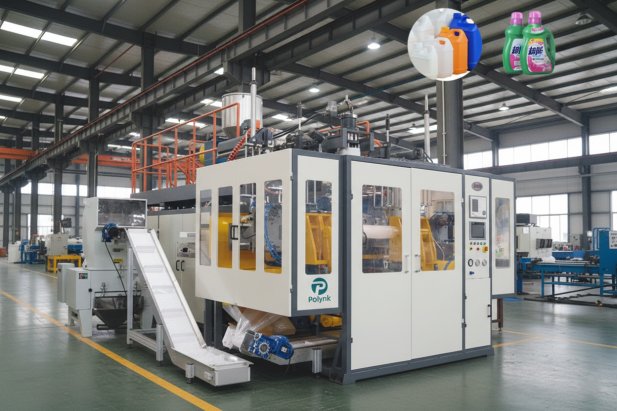

Blow molding machines play a central role in producing hollow plastic products used in everyday life, from water bottles and detergent containers to industrial drums and packaging. These machines transform raw plastic into uniform, reliable shapes through precise heat, pressure, and timing control. Understanding the working process helps manufacturers, plant operators, and engineers maintain quality, reduce waste, and maximize output.
What Are Blow Molding Machines?
Blow molding machines are specialized equipment designed to shape hollow plastic items. They rely on a combination of heat, extrusion, and air pressure to form plastic into specific shapes. Among these, extrusion blow molding machines are widely used in large-scale production because they allow continuous operation with minimal downtime.
Modern plastic blow molding machines are integrated with control panels and computer systems, allowing operators to monitor temperature, parison thickness, air pressure, and cooling cycles in real time.
The Importance of a Structured Workflow
A successful blow molding operation is not just about the machineit’s about the workflow. Material handling, heating, parison formation, mold inflation, cooling, and trimming must happen in a precise sequence. Any imbalance can result in defects, wasted material, or inconsistent product quality. Structured processes also allow multiple machines to work together seamlessly in high-volume plants.
Step One: Feeding and Melting Plastic
The process begins with raw plastic entering the hopper. Gravity feeds the material into a heated barrel, where a rotating screw pushes it forward while friction and heat soften it into a molten state. Maintaining steady temperatures in the barrel is critical. Too much heat can degrade the plastic, while insufficient heat causes poor parison formation.
In modern facilities, computer systems continuously monitor barrel temperatures and screw rotation speeds. These systems help operators keep material consistency stable throughout production.
Step Two: Forming the Parison
Once the plastic reaches the correct molten state, it is extruded through a die to form a hollow tube called a parison. The parison must have consistent thickness to prevent weak spots or overuse of material. Sensors and computer controls help maintain uniformity by adjusting the flow and temperature in real time.
Timing is crucial. Molds must close around the parison while it is soft enough to be inflated but firm enough to retain its shape. Any delay can lead to defects or material wastage.
Step Three: Mold Closing and Air Inflation
After the parison is in position, mold halves close around it. Compressed air is pumped to expand the plastic against the mold's walls. Proper air pressure is critical: low pressure can create weak walls, while excessive pressure can stretch or deform the product.
Computerized control systems in modern blow molding machines regulate air pressure based on mold size, product shape, and wall thickness targets. This ensures consistent results without stopping production.
Step Four: Cooling and Solidification
Cooling solidifies the plastic and prepares it for removal. Molds contain channels where cold water circulates to remove heat evenly. Balanced cooling prevents warping, cracking, or uneven wall thickness. In high-volume plants, cooling speed directly affects overall production output, so monitoring water flow and temperature is essential.
Step Five: Trimming and Finishing
After cooling, molds open, and the finished product is removed. Excess material around seams or edges is trimmed, often using automated systems. Many factories recycle trimmed plastic back into the system, reducing material waste and improving efficiency.
Real-Time Monitoring and Production Control
Modern blow molding machines rely on integrated control systems for real-time monitoring. Operators track parameters such as:
-
Barrel temperature at multiple zones
-
Parison thickness along its length
-
Mold air pressure and timing
-
Cooling water flow rates
Real-time adjustments prevent defects, maintain uniform quality, and allow continuous high-speed production. In plants across the UAE, such systems enable multi-shift operations with minimal downtime.
Comparison Table: Manual vs Automated Blow Molding Processes
| Aspect | Manual/Basic Machines | Modern Automated Blow Molding Machines |
|---|---|---|
| Production Speed | Limited, batch-based | Continuous, high-volume |
| Quality Consistency | Varies per batch | Uniform and reliable |
| Material Waste | Higher due to errors | Lower due to precise control |
| Labor Requirement | High manual involvement | Reduced, operator supervision only |
| Monitoring | Visual and reactive | Real-time computerized control |
This comparison highlights why factories prefer automated extrusion blow molding machines for large-scale operations.
Applications of Blow Molding Machines
Blow molding machines are used across a variety of industries. They produce containers for beverages, detergents, cosmetics, lubricants, and industrial chemicals. The process flexibility allows manufacturers to adjust for different sizes, wall thicknesses, and shapes without significant downtime.
Safety and Operational Advantages
Structured blow molding operations enhance safety and efficiency. Encased machinery reduces the risk of operator injury, and automation ensures fewer human errors. Predictive maintenance tools connected to the machine control systems prevent unexpected breakdowns and extend machine lifespan.
Conclusion
Industries in the UAE are increasingly relying on Blow Molding Machines in UAE because they provide efficiency, consistency, and precision. By understanding the complete working process from feeding and melting to parison formation, mold inflation, cooling, and trimming manufacturers can reduce material waste, maintain high-quality output, and optimize production speed. Modern extrusion blow molding machines equipped with integrated computer operating systems ensure long-term reliability, minimize downtime, and allow factories to produce hollow plastic products on a large scale. Investing in these advanced machines enables manufacturers to meet growing demand, support diverse industries, and maintain a competitive edge in the market.
Visit for news and updates at ovoarticles.com