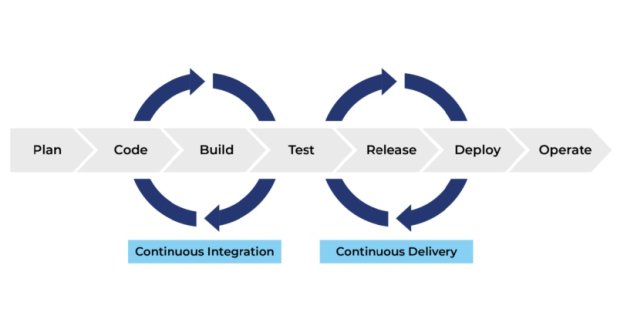

As engineering teams grow and systems become more complex, test automation inevitably expands. More services, more APIs, and more edge cases demand more automated tests. However, many teams discover that as test automation scales, CI/CD pipelines slow down. Builds take longer, feedback loops widen, and developers start viewing tests as a bottleneck rather than a safety net.
Scaling test automation without slowing CI/CD requires a deliberate strategy. It is not about running fewer tests, but about running the right tests, at the right time, in the right way. This article explains how teams can scale test automation while keeping CI/CD pipelines fast, reliable, and developer-friendly.
Why test automation slows down CI/CD at scale
Test automation often starts small. Early on, teams add tests organically, focusing on coverage rather than execution efficiency. Over time, this leads to several problems:
-
All tests run on every commit, regardless of risk
-
End-to-end tests dominate execution time
-
Tests depend on shared environments that serialize execution
-
Flaky tests cause retries and pipeline delays
-
Test data setup becomes slow and complex
These issues are not caused by test automation itself, but by how it is structured and integrated into CI/CD.
Shift from test quantity to test intent
One of the most important mindset changes is moving away from counting tests toward understanding their intent. Not every test needs to run on every pipeline execution.
Tests can be broadly categorized into:
-
Fast, deterministic checks (unit and lightweight integration tests)
-
API and contract-level tests
-
End-to-end and workflow tests
-
Non-functional tests such as performance or security
By clearly defining what each category validates, teams can decide when and where each type of test should run. This alone can dramatically reduce CI/CD execution time.
Use a test pyramid that reflects modern systems
The traditional test pyramid still applies, but it must be adapted for API-driven and distributed systems. Instead of relying heavily on UI-based end-to-end tests, teams should emphasize:
-
Unit tests for business logic
-
API-level tests for service behavior
-
Contract tests for service-to-service compatibility
API-focused test automation is significantly faster and more stable than UI-heavy approaches. By shifting coverage downward in the pyramid, teams can scale automation without increasing pipeline duration.
Parallelize test execution aggressively
CI/CD pipelines slow down when tests are executed sequentially. Modern CI platforms support parallel execution, but many teams underutilize it.
Ways to parallelize test automation include:
-
Splitting test suites across multiple runners
-
Running service-level tests in parallel per microservice
-
Executing independent test groups concurrently
-
Parallelizing setup and teardown steps
Parallelization requires tests to be isolated and environment-independent. Investing in test isolation pays off directly in CI/CD speed.
Make test automation environment-agnostic
Environment dependencies are a common scalability bottleneck. When tests rely on shared staging environments, execution becomes serialized and fragile.
To avoid this:
-
Use containerized test environments
-
Spin up ephemeral test dependencies during CI runs
-
Mock or virtualize external services where appropriate
-
Avoid hard-coded environment assumptions
Environment-agnostic test automation enables horizontal scaling of pipelines and prevents resource contention.
Introduce risk-based test execution
Not every code change carries the same risk. A documentation update should not trigger the same test suite as a core API change.
Risk-based execution uses signals such as:
-
Files or services changed
-
Impacted APIs or modules
-
Historical failure data
-
Recent production incidents
Based on these signals, pipelines can selectively execute relevant test automation instead of running everything. This approach maintains confidence while reducing unnecessary work.
Treat flaky tests as a scalability issue
Flaky tests are one of the biggest hidden costs in CI/CD. They slow pipelines through retries, false failures, and manual investigation.
To control flakiness:
-
Quarantine unstable tests instead of rerunning blindly
-
Track flaky test metrics explicitly
-
Fix root causes rather than adding retries
-
Prefer deterministic API-level assertions over timing-based checks
Stable test automation scales far more effectively than large but unreliable test suites.
Use production traffic to guide test coverage
As systems scale, it becomes harder to predict real usage patterns. Test automation based solely on assumptions often leads to over-testing low-impact paths and under-testing critical ones.
Using production traffic patterns can help teams:
-
Identify high-impact APIs and workflows
-
Focus test automation on real usage scenarios
-
Reduce redundant or low-value tests
Some modern tools can capture real traffic and convert it into test cases, helping teams scale coverage without increasing manual effort.
Decouple test automation feedback from deployment speed
Not all tests need to block deployments. A common mistake is treating every automated test as a hard gate.
A more scalable approach is to:
-
Keep fast, high-signal tests as blocking checks
-
Run slower or exploratory tests asynchronously
-
Feed non-blocking results into dashboards and alerts
This ensures CI/CD remains fast while still benefiting from deep test automation insights.
Measure and optimize continuously
Scaling test automation is not a one-time effort. Teams should continuously measure:
-
Test execution time by category
-
Failure rates and flakiness
-
Pipeline duration trends
-
Cost per pipeline run
These metrics help teams identify bottlenecks early and adjust strategies before CI/CD slows down.
Conclusion
Scaling test automation does not have to mean slower CI/CD pipelines. When automation is designed with intent, isolation, and execution strategy in mind, it becomes an enabler rather than an obstacle.
By focusing on API-level testing, parallel execution, risk-based selection, and test stability, teams can scale test automation while preserving fast feedback loops. The goal is not maximum automation, but effective automation that supports continuous delivery without friction.