
TMS in New York refers to Transcranial Magnetic Stimulation therapy offered in New York-based mental health clinics as a modern, non-invasive treatment for depression and other mental health conditions. This advanced approach, known as TMS in New York, uses magnetic pulses to stimulate specific areas of the brain that are involved in mood regulation, especially in patients who have not responded well to traditional treatments like antidepressant medications or talk therapy.
This therapy has gained attention in New York due to its effectiveness, safety profile, and drug-free approach to mental health care.
Understanding TMS Therapy
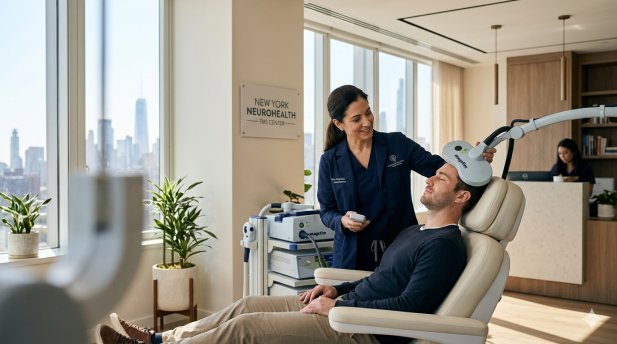
Transcranial Magnetic Stimulation (TMS) is a brain stimulation treatment that uses electromagnetic coils placed gently against the scalp. These coils deliver short magnetic pulses to targeted regions of the brain, most commonly the prefrontal cortex.
The goal of TMS is to activate underactive areas of the brain associated with depression. Unlike medication, TMS does not circulate through the bloodstream and does not affect the entire body.
Patients remain awake and alert during the session, and no anesthesia is required.
How Does TMS Work in the Brain?
TMS works by using magnetic fields to influence neural activity. In people with depression, certain brain circuits become less active. TMS helps “retrain” these circuits by stimulating them repeatedly over time.
Each session typically follows this process:
-
A patient sits in a comfortable chair
-
A magnetic coil is placed on the head
-
Short pulses are delivered in a controlled pattern
-
The session lasts about 20–40 minutes
Over multiple sessions, these repeated stimulations can improve communication between brain cells, leading to better mood regulation and reduced depressive symptoms.
TMS in New York Treatment Process
When patients begin TMS in New York clinics, they usually go through a structured treatment plan:
1. Initial Evaluation
A psychiatrist or trained provider evaluates the patient’s mental health history to determine if TMS is appropriate. This often includes reviewing past medications and therapies.
2. Personalized Treatment Mapping
The brain area to be treated is carefully mapped to ensure accurate targeting. This step is important for maximizing effectiveness.
3. Daily Treatment Sessions
Most patients attend sessions 5 days a week for about 4–6 weeks. Each session is non-invasive and does not require recovery time.
4. Progress Monitoring
Doctors regularly track symptoms to adjust treatment if needed and ensure the patient is responding well.
Conditions Treated with TMS
While TMS is best known for treating depression, it may also help with other conditions such as:
-
Treatment-resistant depression
-
Anxiety disorders (in some cases)
-
Obsessive-compulsive disorder (OCD)
-
Post-traumatic stress disorder (PTSD)
-
Certain chronic pain conditions
However, its primary FDA-approved use is for major depressive disorder that has not improved with medication.
Benefits of TMS in New York
Many patients choose TMS in New York because it offers several advantages over traditional treatments:
Drug-Free Approach
TMS does not require medication, making it suitable for individuals who experience side effects from antidepressants.
Minimal Side Effects
The most common side effect is mild scalp discomfort or headache, which usually improves after the first few sessions.
Non-Invasive Procedure
There is no surgery, no needles, and no sedation required.
No Downtime
Patients can return to work or daily activities immediately after each session.
High Success Rate
Many patients who did not respond to medications report significant improvement after completing a full TMS course.
What to Expect During Treatment
Patients often want to know what TMS feels like. During a session, you may hear clicking sounds and feel a tapping sensation on the scalp.
It is generally not painful, although the first few sessions may feel unusual. Most patients adjust quickly.
Over time, improvements may include:
-
Better mood
-
Increased energy
-
Improved focus
-
Reduced anxiety symptoms
-
Greater interest in daily activities
Results usually appear gradually rather than immediately.
Is TMS Right for You?
TMS is not suitable for everyone, but it is often recommended for:
-
People with treatment-resistant depression
-
Individuals who cannot tolerate antidepressant side effects
-
Patients seeking non-medication-based treatment options
A qualified mental health professional in New York can determine eligibility through a detailed assessment.
Final Thoughts
TMS in New York has become a trusted and innovative option for individuals struggling with depression and other mental health conditions. By using targeted magnetic stimulation, it helps activate underperforming areas of the brain without the need for medication or invasive procedures.
For many patients, it represents a new path toward recovery when traditional treatments have not been effective.