
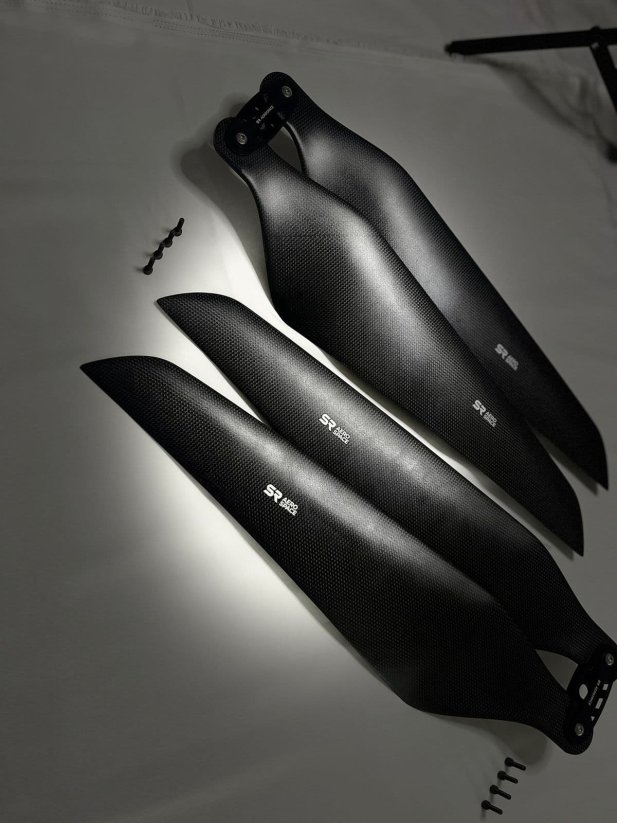

The question most drone operators ask when evaluating Carbon Fibre Drone Propellers is straightforward: is the performance difference worth the higher price? The answer is not universal. It depends on what the drone does, how often it flies, and what the cost of underperformance actually is in your specific operation.
Why Most Operators Answer This Wrong
The default comparison is simple: carbon fibre costs three to five times more per propeller than a standard glass-filled composite. For a hobbyist replacing props after a crash, that premium is hard to justify. That logic transfers incorrectly into commercial operations, where the economics are entirely different.
Commercial drone operations measure cost at the mission level, not the component level. A propeller that improves endurance by 10 percent on a survey drone may reduce the number of missions needed by one per field session. At commercial operator day rates, that single mission saving recovers the propeller premium within weeks, not months.
What the Data Actually Shows
The global UAV propulsion market is shifting toward advanced materials across all commercial segments. According to Allied Market Research, the UAV propulsion system market is expected to reach $13.5 billion by 2031, with high-performance composite materials growing as a share of that market year on year. The shift is driven by commercial operators optimizing for mission performance rather than unit cost.
The data from field operations consistently shows that carbon fibre propellers maintain their efficiency profile over more flight cycles than composite alternatives. Blade surface integrity, pitch consistency, and structural stiffness degrade more slowly with CFRP, which reduces replacement frequency in high-cycle commercial operations.
A Better Framework for the Buying Decision
Rather than asking whether carbon fibre propellers are worth the price, ask which type of operation you are running. For hobbyist and recreational use, the premium is rarely justified. For commercial mapping, inspection, agriculture, and delivery operations, the question inverts. The question becomes: can you afford the mission-level inefficiency of lower-performance propellers?
The other dimension is risk tolerance. Carbon fibre propellers have superior structural properties under stress loading. In heavy-lift or long-endurance operations, a propeller failure mid-mission carries significant equipment and insurance costs. Higher propeller quality reduces that failure probability.
Implementation Steps
-
Define your average mission profile: flight time, payload, altitude, and temperature range.
-
Calculate your current cost per flight hour including propeller replacement frequency.
-
Request performance specifications from your propeller supplier, specifically stiffness rating, weight, and rated RPM range.
-
Test carbon fibre alternatives on a single aircraft over a defined number of missions and compare replacement frequency against the baseline.
-
Evaluate total cost per mission, not unit cost per propeller, before making a fleet-wide decision.
Final Thoughts
Carbon fibre drone propellers are worth the cost for commercial operations where endurance, payload efficiency, and component reliability affect mission outcomes. For those applications, the premium is not a cost. It is an investment in operational performance that pays back faster than most operators expect before they run the numbers.


Carbon fibre propellers definitely justify the investment if you fly regularly. They're noticeably more durable than plastic alternatives and improve flight performance significantly. For casual flyers, standard propellers work fine, but serious drone enthusiasts will appreciate the added stability and longevity. 소액결제 현금화