
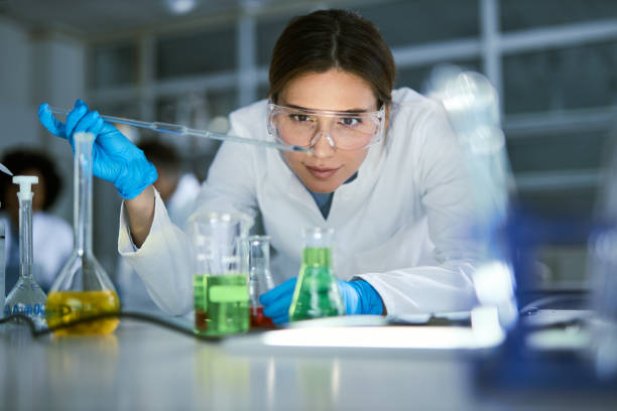

Analytical chemistry has always moved forward alongside the compounds it’s asked to study. As new chemical substances are synthesized in academic, pharmaceutical, and forensic laboratories, they create fresh challenges for identification and measurement and solving those challenges has repeatedly pushed analytical instrumentation and methodology forward.
Reference standards and method development
Every analytical technique needs something reliable to calibrate against. Certified reference materials chemically well-characterized compounds with known purity and structure are the backbone of accurate testing. As novel compounds are synthesized in research settings, chemists must develop new reference standards for them, which in turn drives refinement of separation and detection methods.
This cycle has been especially visible in forensic and toxicology labs, where identifying an unfamiliar compound in a sample often means building an analytical method from scratch: determining the right chromatography conditions, mass spectral signatures, and detection limits before a substance can be reliably identified elsewhere.
Key techniques shaped by this work
Gas chromatography-mass spectrometry (GC-MS) remains a workhorse for identifying volatile and semi-volatile organic compounds, separating a mixture into components and then fragmenting each one into a mass spectrum “fingerprint” for identification against spectral libraries.
Liquid chromatography-mass spectrometry (LC-MS), particularly high-resolution variants, has become essential for larger or less volatile molecules that GC-MS can’t handle well. The demand for identifying structurally novel or closely related compounds has pushed resolution and sensitivity improvements in LC-MS instruments over the past two decades.
Nuclear magnetic resonance (NMR) spectroscopy provides detailed structural information that mass spectrometry alone can’t, and remains the gold standard for confirming molecular structure when a compound is genuinely new to the literature.
High-resolution and tandem mass spectrometry allow analysts to determine exact molecular formulas and fragmentation pathways, which is critical when distinguishing between structurally similar compounds a common challenge when new chemical variants appear faster than reference libraries can be updated.
Spectral libraries and database challenges
One ongoing challenge in analytical science is that spectral databases can only include compounds that have already been characterized. When laboratories encounter a compound not yet in any library, they must generate reference data essentially from scratch synthesizing method development, structural elucidation, and quality control into a single process. This has driven collaborative efforts between forensic labs, academic institutions, and regulatory agencies to share reference data more quickly, shortening the gap between a new compound’s appearance and its reliable identification.
Broader impact on the field
The demand for rapid, accurate identification of novel substances has had ripple effects across analytical chemistry as a whole. Improvements in instrument sensitivity, automation, and data processing originally driven by the need to characterize unfamiliar compounds now benefit fields as varied as environmental testing, pharmaceutical quality control, and food safety analysis.
The bottom line
The relationship between novel chemical compounds and analytical methodology is genuinely reciprocal: new substances create identification challenges, and solving those challenges produces techniques and instrumentation that strengthen the field broadly. This dynamic is a significant reason why modern analytical chemistry spanning forensic science, pharmaceutical research, and academic chemistry alike has become as precise and adaptable as it is today.

This article effectively highlights how research chemicals drive innovation in analytical methodologies. The detailed examination of their applications demonstrates their critical role in modern scientific discovery. A compelling read for anyone interested in chemistry and laboratory advancement. Click here for details