
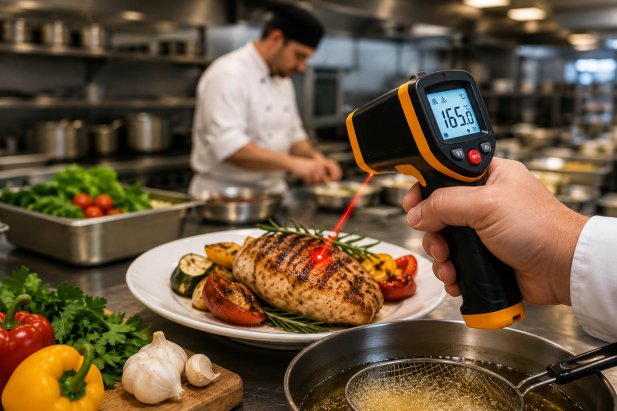

If you step into any bustling Australian pub kitchen on a hectic day, you will feel the heat immediately. Orders are piling up, and meals are being served at a fast pace. At this time, maintaining safety standards is one of the difficult yet important things to follow. Everyone knows the way things can go wrong when people are on their toes.
This is precisely the reason why having a good infrared food thermometer within reach in your preparation area is an absolute godsend. It eliminates all the guesswork from the equation. You get instant and accurate temperature measurements without even touching the food.
The Magic of Non-Contact and Remote Measurement
Using one of these clever little devices is about as simple as it gets. You just aim the laser guide at your food and squeeze the main trigger.
Your surface temp pops up on the screen in a single second. Just like that.
But the real magic here is the complete lack of physical contact. Think of the hours you will save on washing up. There are no greasy metal probes to wash and sanitise every single time you check a dish.
This touch-free approach blocks cross-contamination dead in its tracks. It keeps your food prep running clean, safe, and incredibly fast.
Plus, the solid handle design and angled sensor feel great in the hand. It makes monitoring temperatures feel like a natural part of your routine.
Achieving Culinary Precision and Safety
Getting your food temperatures spot on isn’t just about dodging a nasty stomach bug. It is about serving up absolute perfection to your hungry guests every single shift.
One of the best benefits of infrared cooking thermometer tools is their ability to read dual temperatures. Good units let you check both the deep core and outer surface temperatures. This gives you absolute control over your cooking methods.
You can check on hazardous ingredients instantly to ensure they stay well away from the danger zone. It removes all the stress from high-volume catering. Nobody wants to make their patrons sick.
Matching the Right Model to Your Kitchen
Not every food business handles the same menu, so you need the right tool for your specific setup. Basic units cover from -20°C up to 320°C. That is perfect for standard fridge runs and hot buffet checks.
But if you are running screaming hot woodfire pizza ovens, you will need a bit more muscle. Go for a rugged model that tops out around 500°C or 535°C.
For heavy industrial kitchens, you can even find thermocouple systems that measure all the way up to 1380°C. It is all about finding a model that matches your daily menu. Get the right gear and your crew will work with absolute confidence.
Key Features to Look For
When you are choosing a new thermometer, search for something built like a tank. You want a durable, water-resistant unit that won't die the first time it gets splashed during service.
Look for these essential features on the box:
- A bright LCD screen that shows your temperatures in Celsius.
- A simple HOLD button that freezes the screen so you have plenty of time to write down the numbers.
- An automatic BEPS system that shuts the unit off if battery power gets too low for an accurate read.
- A low battery warning light that starts flashing before your power level drops past ten per cent.
These safety features mean you will never get caught out with a dodgy reading from a dying battery. It keeps your food safety logs clean and accurate.
The Secret to Deep Frying and Liquid Foods
What happens when you need to check bubbling deep fryers or huge pots of stock? While lasers are great for fast surface scans, pairing them with a proper cooking oil thermometer is a smart move. It allows you to monitor hot liquids and frying oils with complete safety.
Using the right tool for each job prevents your oil from burning and keeps your food crispy. It is a simple way to take your kitchen game to a professional level. Keep both handy in your tool drawer.
Best Practices for Using Your Thermometer
Always stand close to the food when measuring its temperature. The farther you go from the object, the less accurate your measurement will be.
Ensure that you measure the temperature of several parts of the object. Usually, there are cases where the food is hot in some areas but cool in others.
Bear the following safety guidelines in mind as well:
- Use the laser solely to measure the temperature of food. Do not use it to check a person’s body temperature.
- Never aim the laser pointer at anyone's eyes.
- Be reasonable and responsible during the preparation period.
Conclusion:
The infrared thermometer makes the whole process of temperature checking an easy job. The device is quick, hygienic and extremely user-friendly. Get your hands on the best kitchen equipment to ensure food safety standards are maintained.


Infrared thermometers are game-changers for cooking accuracy. They give instant temperature readings without touching food, which is perfect for checking meat doneness or candy stages. Every home cook should definitely have one—it takes the guesswork out of cooking. 정보이용료 현금화