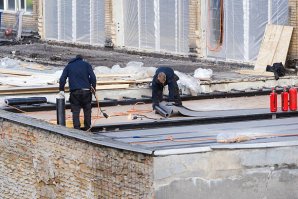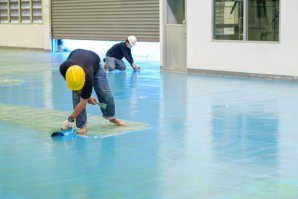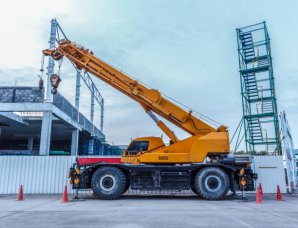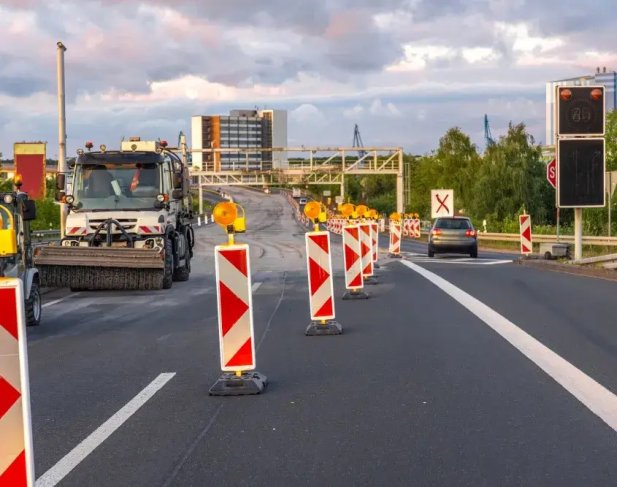

A construction site is a highly complicated puzzle that involves the use of machinery, time limitations, and changeable weather conditions. Which factor usually adds unpredictability to such a construction site? It's not the machines that do the work, but the people who happen to be around the site who create problems. Good luck alone will not be able to bring about the needed order in the chaotic situation. It is only thorough planning that can make it work. That is the reason why the best project leaders always work together with traffic management companies to secure their premises before the work commences.
Why "Stop/Slow" Bats are Only 10% of the Equation
Designing for Multi-Directional Risk: The Blueprint of Protection
Safety starts long before any orange cones hit the tarmac. You can't just wing it on site. True protection requires deep planning that maps out every risk. This isn't just about slowing down passing cars. It’s about managing the chaotic dance of heavy machinery, site visitors, and the public.
We have to design for multi-directional hazards. Standard setups often focus solely on the road, forgetting about the people walking past. That's why leading civil works use specific blueprints:
- Traffic Guidance Schemes (TGS) to control the flow of live public traffic.
- Pedestrian Movement Plans (PMPs) to keep locals safely separated from active work areas.
- Vehicle Movement Plans (VMPs) to manage heavy machinery reversing and tipping on site.
The Paperwork Shield: Protecting Your Council MOA and ROL Permits
Acquiring such permissions is rather tough. MOA and ROL are very much needed to carry out works along urban arteries. A detailed traffic management plan is the way to go if you want to keep the councils happy and also prevent any sort of closure.
Passive vs. Active Protection in High-Speed Work Zones
When you’re working on a high-speed arterial or highway, plastic cones won't save you from a distracted driver. You need a physical barrier. That’s where a Truck Mounted Attenuator (TMA) comes in. It's essentially a massive, highly visible crash cushion mounted to the back of a heavy truck.
Imagine a highway resurfacing job at midnight. A driver falls asleep at the wheel and ploughs right into the work zone. Without a TMA, it's a multi-fatality tragedy. With a pre-positioned TMA vehicle, the impact is absorbed. The driver walks away with minor bruises, and the road crew doesn't even get a scratch.
Building a "Zero Harm" Safety Culture on Site
Moving Beyond Compliance to Active Danger Prevention
Safety gear and paperwork are useless if your crew doesn't actually care. You need a site culture where safety is an active, shared attitude. Everyone must look out for each other. That means frontline traffic controllers, dogmen, riggers, and project leads must all be on the same page.
It pays to work with teams that take this seriously. We’re talking about partners that have achieved major milestones, such as more than one million hours without harm, no lost time injuries (LTIFR) and zero WorkCover claims.
If you're looking for high-quality traffic control services in Melbourne, look for teams that treat safety as a non-negotiable standard, not a compromise. Active hazard reporting and daily pre-start toolbox talks keep safety top of mind. And that makes a massive difference to your project timeline.
The Strategic Advantage of Social Procurement in Site Safety
Meeting Government Safety Standards and APIC Targets Simultaneously
Today's civil engineering projects have to contend with a dual difficulty. Safety prequalification requirements are strict to meet, and so are local procurement targets. Many people are mistaken to think of it as a zero-sum game where a top-notch safety provider has to be the social enterprise alternative or vice versa. In fact, both can have their way.
Certified Indigenous traffic firms will give you the opportunity to work with an Aboriginal contractor that fulfils requirements such as the Victorian Indigenous Social Procurement (ISP) guidelines or the NSW Aboriginal Participation in Construction (APIC) targets, while delivering an excellent quality of work.
Conclusion:
In the end, well-managed traffic control remains the top priority when it comes to carrying out any civil construction projects that come up. It is something that can potentially reduce casualty figures by a whole lot and can also be used to help keep your site within any and all laws it must abide by, apart from helping you fulfil your local/social plans. Because of this, why take the chance and put yourself in danger? Get in touch with specialists for traffic control assessment permits, expert staff, and all the needed services for your forthcoming large construction project.