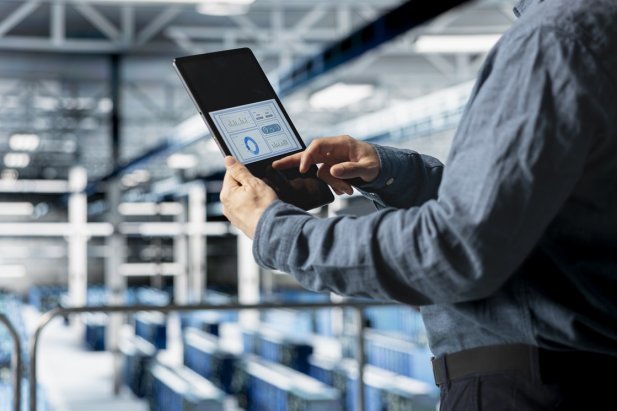

Every product that reaches a customer's doorstep — whether it's a phone, a bag of rice, or industrial machinery — passes through dozens of coordination points before it gets there. Sourcing, warehousing, transportation, and delivery all have to work in sync, and increasingly, that coordination doesn't happen through spreadsheets and phone calls anymore. It happens through Supply Chain Management Software.
Why Businesses Are Moving Away from Manual Processes
Manual coordination worked when order volumes were small and predictable. But as businesses scale, the cracks show up fast — delayed shipments nobody noticed until a customer complained, inventory counts that didn't match reality, and warehouse staff spending hours on tasks that software could handle in seconds.
Supply Chain Management as a discipline has responded to this by leaning heavily on automation, real-time data, and predictive tools. Instead of reacting to problems after they've already disrupted operations, modern platforms are built to flag issues before they escalate — a stock shortage before it becomes a missed order, a vehicle delay before it becomes a broken delivery promise.
What Good Supply Chain Software Actually Does
At its core, this kind of software connects the dots between different operational layers: inventory levels, warehouse activity, transportation routes, and supplier data, all visible from a single dashboard rather than scattered across disconnected tools. This visibility is what allows businesses to make faster, better-informed decisions — whether that's rerouting a delayed shipment or adjusting stock levels ahead of a demand spike.
The Role of Supply Chain Management Companies
This is also why more businesses are turning to established Supply Chain Management Companies rather than building these systems from scratch. Developing reliable IoT integrations, predictive algorithms, and real-time tracking infrastructure takes years of domain-specific refinement — expertise that's often faster and more cost-effective to access through an experienced technology partner than to build internally.
Where Physical Security Fits In
As supply chains become more digitized, physical security has had to catch up too. This is where newer Supply Chain Technologies like GPS Locks are becoming an important layer — connected locking systems that combine physical container security with real-time location monitoring, sending alerts if a container is accessed outside approved hours or deviates from its expected route. Unlike a traditional padlock, this turns security into an active, monitored part of the supply chain rather than a passive barrier that only gets checked after something has already gone wrong.
Bringing It All Together
The businesses seeing the strongest results aren't necessarily using the most feature-heavy tools — they're the ones whose warehousing, transportation, and security systems all talk to each other as a single connected operation. That's ultimately what good Supply Chain Management Software is meant to do: turn a fragmented, reactive process into one that's visible, predictable, and built to scale.