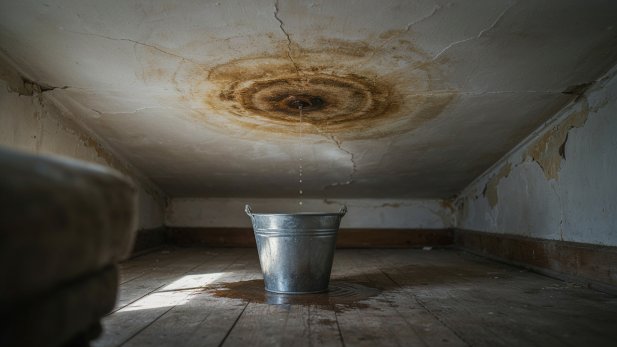

Imagine this scenario – you are in Melbourne and it is pouring like there's no tomorrow; and then, drip, right into your house. You raise your eyes to an unsightly brown circle on the plasterboard and assume that the leak is right above your head. But, most of the time, you might just be barking up the wrong tree. The first thing you need to keep in mind if you are hunting for a leak in such a manner is that water is a fickle medium. It will get into the tiniest crack available, travel for miles along the rafters and ceiling joists and finally make its way out wherever it can. If you do not do something about it or identify the wrong area, you have rotted timber framework and a damaged ceiling coming down the road. That is why getting timely roof leak repair in Melbourne is so critical before a small drip turns into a massive headache.
What’s Actually Causing That Moisture?
Note to self: Don't reach for that ladder!
The first step is to determine if you've rain infiltration or a moisture problem indoors. Another silent trouble, maker in Victoria winter is attic condensation.
Here is how to tell them apart:
- Interior leaking on the roof: Water from a warm shower or heater ascends into the cooler roof space. The water is evenly distributed across the roof deck in a way that looks like sweat from wood or droplets.
- Active roof leaks: These only show up when it rains, leaving localized wet streaks or a steady drip syncing with storms outside.
- Attic "shiners": Sometimes the culprit is a stray nail that missed the rafter. On freezing nights, moisture frosts over the metal tip, then melts and drips as the roof space warms up the next day.
The Real Suspects Behind Roof Leaks
If rain is definitely penetrating, there's no point looking at the flat roofing tiles or at the metal sheets. More than 80% of the entry points are at joints, flashing, and penetrations. As the rain and temperature fluctuate, the metal works, seals open up, and water gets in.
Jumping on these common roofing issues sooner rather than later can actually save you a bunch of cash.
Keep an eye out for these vulnerable spots:
- Plumbing vent boots: Your rubber collar around the pipe rots away and cracks due to the sun.
- Chimney flashing: Mortar deteriorates, step flashing rusts and pulls away, and water backs up behind bricks.
- Skylights: Over time, the neoprene bends, dilates, and loses elasticity so that it no longer seals around the frame.
- Roof valleys: Leaves build up in the channel, forcing heavy rainwater under tile edges.
How to Trace the Water Trail
Finding the source is pure detective work. Always start inside:
- Head into the roof cavity: Take a torch into the ceiling space while it's still raining or right after a downpour.
- Measure off the walls: Measure from the ceiling stain to the wall, on two outside walls, so you can find the one specific spot under the roof.
- Follow dampness uphill: Water won't travel uphill, so identify the dark effects and wet insulation or timber than follow back in the direction of the ridge.
- Check penetrations higher up: Look carefully at any vent pipes, chimneys, or valleys located higher up the slope.
Dry Outside? Try the Hose Test
If the weather has cleared and you still can't find the breach, run a controlled water test with a mate. One person stays inside the ceiling cavity with a torch. The other stands on the ground with a garden hose on low pressure.
Spray one specific area at a time, starting low near the eaves, and wait five minutes before moving higher. The second your helper sees water seeping inside, you've found your culprit.
Emergency Triage Before Repairs
While waiting for help, protect your living area:
- Stop splashing: Tie a piece of string to the ceiling draught. Let the other end hang into a bucket so that water runs down it quickly. This avoids splashing.
- Relieve pressure: When the plasterboard was very flexible, a puddle forming underneath would cause it to bow. To prevent this, once the plasterboard sagged a lot, a small pilot hole was drilled out in the middle with a screwdriver, and the puddle was drained into a bucket.
Conclusion:
You can't leave a leak to "fix itself"; you're just gambling on losing. Calling in the experts for roof repair services in Melbourne means that any damaged flashing is replaced, vent boots are re-sealed, and your home remains dry, whatever the state of the weather.