
Subaru owners in Australia are a passionate bunch, and for good reason. Whether you're slogging through Melbourne’s rainy winter traffic or taking off for a long weekend in the bush, that flat-four boxer engine and symmetrical AWD setup give you a drive that feels stuck to the road. But the second you spot a pool of coolant on the driveway or a warning light flickers on, your stomach drops. Figuring out whether you’re up for routine Subaru engine repairs in Melbourne or facing a total mechanical overhaul isn't just stressful; it can throw a real spanner in the works for your wallet.
What Makes the Subaru Boxer Layout So Unique?
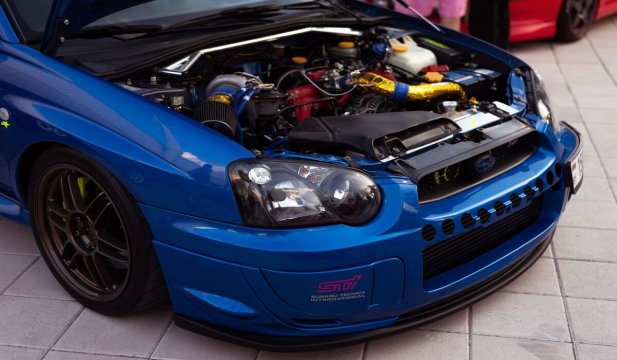
To understand why these cars run into weird engine troubles, you have to look at how they're built under the bonnet. Unlike a standard inline four-cylinder sitting upright, a boxer engine lays flat, firing pistons side-to-side. That keeps the car's centre of gravity nice and low, which is brilliant for handling around corners. The catch? The cylinder heads sit sideways, right where thermal stress and gravity like to work on the gaskets over time.
If you drive an older EJ25 2.5-litre model (reckon late nineties through to mid-2010s), external head gasket weeping is almost a rite of passage. Step into a newer FB25 engine, and while the head gaskets hold up much better, design quirks in the piston rings can mean you're topping up the oil more often than you'd like. There are also the turbo variants such as the WRX, which could suffer from ringland failure or spun rod bearings in case of excessive usage.
Ignoring the early signs of leakages will have you dealing with the problem of Subaru overheating and resulting deformation of the cylinder head as well as destroyed bearings.
Fix the Part or Cut Your Losses?
So, how do you know if it's worth fixing what's there?
In case your vehicle has not travelled many kilometres and your car's body and transmission are still in excellent condition, then replacing parts that have failed is a pretty obvious task. By swapping out leaky head gaskets, a new water pump, or a fresh timing belt, your engine can run for a long time without major expenses.
Average cost to replace head gasket an average head gasket replacement will range between $1,500-$2,500 based on your vehicle. The whole process involving MLS gaskets, machining of the cylinder heads, water pump and gear change will take around $2,500-$4,000. That’s a sensible investment as long as the engine hasn't cooked itself and oil hasn't turned into a milky slush inside the block.
Knowing When to Call It a Day
Sometimes, though, patch jobs just don't cut it.
When internal components disintegrate, trying to fix things piecemeal becomes a money pit. Once an engine suffers severe heat damage, scores cylinder walls, or sends metallic debris through the oil channels, patching up one seal won't bring back factory reliability. In those cases, biting the bullet on a Subaru engine replacement in Melbourne is by far the smarter move.
A good rule of thumb? The 50% rule. If a quote to repair the old motor hit half of what it costs to install a fresh reconditioned or low-km engine, go for the swap. Replacement costs can range from $4,000 to $8,000+ depending on your choice of a second-hand motor or a reconditioned one.
Labour Realities and Tech Hassles
Some good news for you: Subarus are much easier to disassemble than most other all-wheel-drive vehicles. The mechanic can lift the boxer engine out of the hood without removing the front subframe and suspension. This keeps the disassembly labour rather clean.
Nonetheless, the number of hours that will be charged will be significant. It is recommended to change all the peripheral components, such as the rear main seal and the clutch, while the engine is already disassembled from the car.
Moreover, there are electronic components that should not be ignored. Modern Subarus have a connection between the ECU, body control module, and security keys. So, in many cases, re-flashing or cloning is needed.
The Quick Decision Checklist
When considering whether to repair or replace your engine, remember this simple list:
Go with repair, if the leakage is only outside the engine, occurs early, and your Subaru engine has low mileage and good maintenance record, go with repair.
Go with replacement if there has been severe overheating of the engine and mixing of oil and coolant, or if repair costs more than half the cost of a new engine; then choose replacement.
Conclusion:
Whatever your decision, have a full diagnostic scan and pressure test done by a reputable specialist before moving forward. This way, you can be sure what you are up against before spending any money.