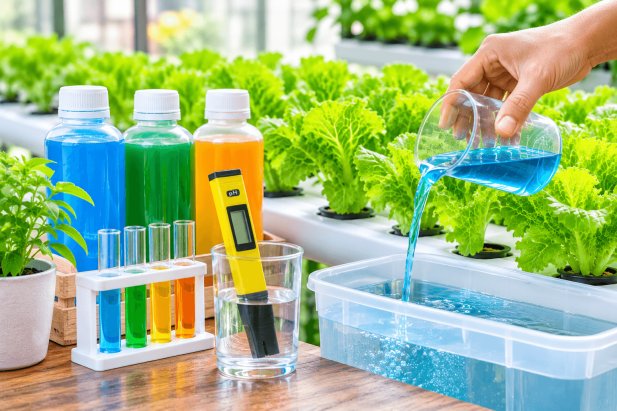

Have you ever dumped garden fertiliser into a bucket of water and crossed your fingers? Well, then, you’ve experienced first-hand that when it comes to water and soil, the two do not follow the same rules. In your garden beds, soil will do everything for you. It will hold water, protect billions of beneficial microbes, and slowly feed your plants when they are hungry. Without soil, your plants will be totally at your mercy. Whatever you’ll add to the solution will become the only source of nutrition for them. But stepping right into the new experience can make one scared of rows of colourful bottles, the periodic table and contradicting forums. However, the great news is that becoming a guru in hydroponic nutrients is not something that requires you to put on a lab coat. It just requires understanding your plants’ needs and preferences.
What Plants Actually Eat
The elemental nutrition requirements of the aquatic plants and the backyard garden plants remain the same. All you need to do is dissolve these nutrients in water for the roots to absorb them instantly.
Here's how to visualise their diet in three buckets:
- The Big Three (N-P-K): Just take a look at any feed container and you will see three figures printed on it. The nitrogen (N) encourages green foliage and sprouting. The phosphorus (P) aids in healthy root development and budding of flowers. Potassium (K) acts as the all-round gym coach. It strengthens the stems, manages the internal fluid pressure, and helps in developing fruits.
- The Supporting Cast: Calcium and magnesium are essential. Calcium creates firm cell structure which keeps the plants erect. Magnesium forms the core of the chlorophyll molecule.
- The Trace Minis: Iron, boron, manganese, zinc, and copper. These trace minerals play an important role, although in small amounts. Without any of these, you will witness your plants having fits through their leaves.
Feeding for the Crop, Not the Garden
Different plants are going to have different appetites for their nutrients. Sorting them according to their growth will make your life so much easier.
- Leafy Vegetables and Herbs
Lettuces, silver beet, spinach, mint, and basil are leafy plants. To grow big and healthy, they require constant nitrogen levels, but no phosphorous because otherwise, they will start flowering and get tough and bitter in taste. Mild fertiliser for vegetable is all they need.
- Fruit and Flowering Plants
These plants are completely different from each other and will need something else in their diet. Initially, they require low nitrogen levels to grow a strong plant structure. Once flowering starts, you should cut down the nitrogen and switch to fertilizers rich in phosphorous and potassium levels. Otherwise, you can grow yourself a huge green plant which is going to give you just a couple of fruits.
Synthetics Versus Organics
Head over to your nearest hydroponic shops, and you'll see that the products on offer fall into one of two categories: synthetic mineral mixes from the laboratory and organics from a bottle.
When growing indoors or anywhere else, for that matter, opt for synthetics all the way.
The reason being that synthetic mineral salts are already refined into 100 percent ionic form, meaning that your plants can absorb them immediately, without having to undergo digestion processes facilitated by soil microbes.
Two Part Bottles – Mystery
Have you ever wondered why base feed is always contained in two bottles that are marked "Part A" and "Part B"?
Thank chemistry for that.
If the manufacturers decided to put concentrated calcium and phosphates in one bottle, there would be an instant reaction between them, causing your liquid feed to turn into chalk.
Additives, Routines, and Spotting Trouble Early
In order to avoid damaging your plants, it is important to know the difference between additives and nutrients. Nutrients are essential for the growth of the plant and should be included in all stages of growth. Additives such as silica boosters, cal-mag and root boosters are optional. These can be used to improve growth when the tap water quality is poor, or in extreme hot weather. However, adding all available additives to your tank will throw the mineral balance out of sync and will also cost you a lot of money.
To keep things running smoothly, stick to three basic habits:
- Top off mid-week: As plants take up more water than nutrients in the heat of the day, you may want to top up the water in the planters with clean water every few days to ensure that you have a stable level of EC within the system.
- Dump and start again fortnightly: On average, every 10-14 days, empty out the stale reservoir water, clean up the plastic tub, and make your own fresh feed from scratch.
- Read your foliage: Foliage that is faded and pale in the lower parts is often a sign of nitrogen deficiency. When new growth is curled and yellowish, it could mean a lack of calcium or iron; however, 9 times out of 10, this is the result of drifted pH.
Final Thoughts:
It is true that hydroponic farming has an image issue concerning its complex nature, but the truth is that there are no requirements to have automated nutrient delivery systems and sophisticated computer spreadsheets to achieve high yield. It turns out that plants are quite easy going creatures as long as their primary needs are satisfied.
Use only clean water, prepare your two-part fertiliser according to the instructions in the correct concentration, and give just two minutes of your time to check your growing area each morning or every other morning. And everything else will be done perfectly on schedule by the mechanism of your setup.