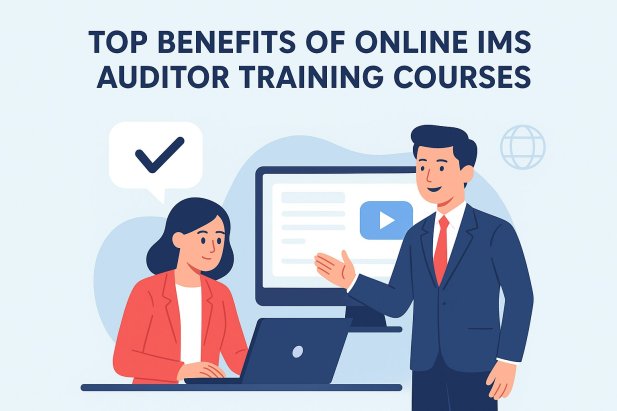

In today’s fast-paced business environment, organizations are under constant pressure to comply with multiple international standards such as ISO 9001 (Quality Management), ISO 14001 (Environmental Management), and ISO 45001 (Occupational Health & Safety Management). Instead of treating these standards separately, many organizations integrate them into a single Integrated Management System (IMS). To ensure the success of an IMS, trained auditors play a crucial role by verifying compliance, identifying risks, and guiding organizations towards continual improvement. With the rise of digital learning, online IMS auditor training courses have emerged as one of the most effective and accessible methods to develop skilled auditors.
Here are the top benefits of pursuing an online IMS auditor training course:
1. Convenience and Flexibility
One of the biggest advantages of online IMS auditor training is flexibility. Professionals can learn at their own pace and from any location. Whether an employee is based in a corporate office, a manufacturing unit, or working remotely, online training removes the barriers of time and travel. Learners can access modules during their free time, review concepts multiple times, and balance training with job responsibilities.
2. Cost-Effective Learning
Traditional classroom training often involves significant expenses such as trainer fees, venue booking, printed material, and travel costs. Online IMS auditor training eliminates these overheads. Organizations can train multiple employees at a fraction of the cost, making it an affordable choice, especially for small and medium-sized enterprises (SMEs) that want to build auditing capabilities without stretching their budget.
3. Comprehensive Coverage of Standards
A well-structured online IMS auditor training course covers the requirements of multiple standards such as ISO 9001, ISO 14001, and ISO 45001, as well as their integration aspects. Instead of learning each standard separately, learners gain a holistic understanding of how processes overlap, interact, and support one another. This integrated approach saves time and ensures auditors are better prepared to assess complex systems.
4. Interactive and Engaging Learning Experience
Modern online courses are no longer limited to text-based content. They include interactive modules, case studies, practical examples, and even simulated audits. These elements help learners apply theoretical knowledge in practical scenarios. Some courses also include quizzes, assignments, and progress trackers that make the learning journey more engaging and effective.
5. Self-Paced Learning for Better Retention
Not everyone learns at the same speed. Online IMS auditor training allows learners to progress at a pace that suits them. They can pause, revisit difficult topics, or move quickly through sections they find easier. This personalized approach helps learners retain concepts better and builds strong auditing skills that can be applied in real-life situations.
6. Global Accessibility and Networking
Online training breaks geographical boundaries. Professionals from different countries and industries can enrol in the same program. This creates opportunities for networking and knowledge sharing with peers across the globe. Such diverse perspectives enrich the learning experience and prepare auditors to handle audits in multinational environments.
7. Certification and Career Advancement
Upon successful completion, participants receive a recognized certification that validates their competence as IMS auditors. Such credentials are highly valued by employers and can significantly boost career opportunities. Certified IMS auditors are in demand across industries, from manufacturing and construction to healthcare, IT, and services.
8. Alignment with Digital Transformation
As organizations adopt digital tools for management, documentation, and auditing, online IMS auditor training aligns well with this transformation. Many courses introduce learners to digital audit tools, online reporting systems, and cloud-based document management, preparing them for the future of auditing.
9. Continuous Learning and Updates
Standards like ISO 9001, ISO 14001, and ISO 45001 are revised periodically. Online training platforms can be updated quickly to reflect the latest requirements, unlike printed manuals or classroom material. Learners get access to the most up-to-date content, ensuring their knowledge remains current and relevant.
10. Encourages Organizational Growth
When employees undergo IMS auditor training, organizations benefit from improved internal auditing, early identification of risks, and better compliance with multiple standards. This strengthens credibility, enhances efficiency, reduces costs, and builds customer trust — all of which contribute to sustainable organizational growth.
Conclusion
Online IMS auditor training course offer a modern, flexible, and cost-effective way to build essential auditing skills. They combine the advantages of convenience, interactive learning, and global accessibility with the assurance of certification and career growth. For organizations, investing in online training helps cultivate competent auditors who can successfully evaluate integrated management systems, ensuring compliance and driving continual improvement.
In a world where businesses must constantly adapt to changing regulations and stakeholder expectations, online IMS auditor training is not just an option — it is a strategic investment in both individual careers and organizational success.