
Mechanical floors are essential parts of high-rise buildings because they house the core systems that keep the tower running. These floors support HVAC units, electrical rooms, water pumps, and fire safety equipment. In a city like Dubai, where towers rise quickly and space is tight, clear communication about sequencing becomes crucial.
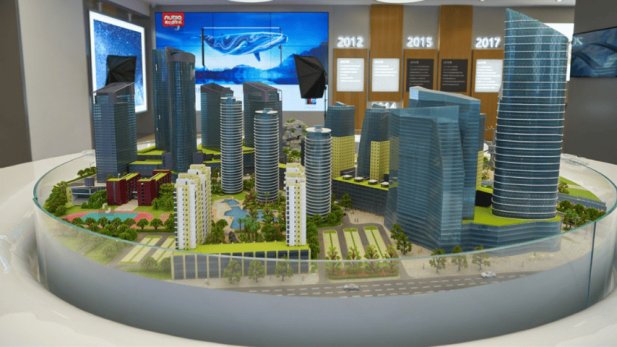
Many teams use architectural scale models to show how mechanical floors are introduced at various heights throughout construction. These physical models help different stakeholders see when each mechanical level appears, how it interacts with structural progress, and how it influences logistics planning as the tower rises.
Layered Vertical Cutaways Showing Floor Positions
One of the most common ways to display mechanical floor sequencing is through vertical cutaway sections. These cutaways reveal the interior layout and clearly indicate where mechanical floors sit in relation to the tower’s core.
By including different layers within the model, teams can remove or lift sections to view each mechanical level. This lets engineers discuss how early core construction supports mechanical zones and how later floors integrate with completed sections. Cutaways make it easier to track the vertical rhythm of mechanical floors and understand how they appear throughout construction rather than all at once.
Color Coding Mechanical Levels for Easy Identification
Color coding is often used to distinguish mechanical floors from standard residential, hotel, or office levels. By assigning mechanical floors a unique color, the model highlights where each of these specialized layers exists within the tower.
This helps explain the sequencing because viewers can easily see which floors need to be completed first and how often they repeat. In many Dubai towers, mechanical floors appear every 20 to 30 levels, depending on system needs. The color distinction ensures that even non-technical stakeholders immediately recognize where mechanical breaks occur.
Representing Mechanical Equipment Zones and Clearances
To make sequencing clearer, models often include simplified shapes representing HVAC units, water tanks, generator rooms, or exhaust shafts. These block shapes show how much space each system occupies and help illustrate why mechanical floors cannot be shifted during construction.
By placing these components visually within the mechanical levels, the model explains how structural supports and vertical cores must be aligned early. This also highlights why mechanical floors often need to be built ahead of certain tower phases. When included in architectural scale models Dubai, these equipment indicators help teams understand how mechanical areas influence the overall build schedule.
Showing Core Wall Connections and Service Risers
Mechanical floors are closely linked to vertical risers that run through the entire building. Models show these risers as small channels or colored lines traveling up the tower’s core. This representation helps explain how mechanical floors connect to electrical, plumbing, and cooling systems.
By seeing where these risers emerge or shift, it becomes easier to explain the sequence in which mechanical levels must be completed. Some risers need to be active early for lower floors, while others support upper floors as construction advances. Displaying this connection visually clarifies the timing and reduces confusion during coordination.
Indicating Temporary Openings for Equipment Lifting
High-rise buildings often require temporary openings in mechanical floors for lifting large equipment. These openings appear during construction and are later closed once installation is complete.
Scale models represent these openings using removable plates or marked openings within the floor layers. Showing these temporary voids explains the sequencing because it demonstrates when heavy machinery must reach certain levels before the structure becomes too tall. It also clarifies that mechanical floors require precise planning to accommodate lifts and deliveries during tight site operations.
Sequenced Floor-to-Floor Build-Up Using Removable Sections
Another effective way to communicate sequencing is through removable towers or stacking modules. The tower may be built in layers within the model, and each mechanical floor is represented by a specific module.
Teams can remove or reveal higher modules to show how sequencing progresses upward. This modular feature helps visualize the step-by-step nature of high-rise construction. It also allows planners to demonstrate when mechanical floors must be completed relative to façade installation, interior work, and vertical transportation systems.
Highlighting Ventilation Shafts and Airflow Paths
Mechanical floors connect closely to the building’s ventilation system. Models often include simplified airflow paths or façade openings to illustrate where air intake or exhaust occurs. These details help explain why mechanical floors are placed at certain heights and in specific zones.
When airflow paths are included in the model, viewers can better understand how external openings must align with construction stages. For Dubai towers, this is particularly important because of the region’s climate and high cooling demands.
Showing Relationship Between Mechanical Floors and Façade Sequencing
Façade installation in high-rise projects must align with mechanical floor completion. Models often display this relationship by using different façade textures or patterns at mechanical levels. These sections may appear open or partially completed to indicate later installation stages.
Showing façade differences helps teams see when façade work pauses or shifts to accommodate mechanical equipment placement. This connection between mechanical sequencing and façade progress is critical for avoiding clashes and maintaining safety on-site.
Visualizing Mechanical Transition Floors in Mixed-Use Towers
Mixed-use towers often include transition floors that separate residential, commercial, hospitality, or amenity zones. Mechanical floors often sit at these transition points. Models visualize these changes by highlighting shifts in massing or façade design around mechanical levels.
This helps explain how the building structure transitions and how mechanical floors must be timed with these shifts. These visual cues make sequencing easier to understand across different building functions.
Conclusion
Mechanical floor sequencing is a crucial part of high-rise construction, and clear representation helps ensure smooth coordination between design teams and contractors. Through layered cutaways, color coding, equipment markers, removable modules, and airflow indicators, architectural scale models provide an intuitive way to understand how mechanical floors rise with the tower. This improves planning accuracy, reduces onsite errors, and supports clearer communication across all project stages.