
Running a food business is not just about good recipes or skilled chefs. Behind every well-served meal is a properly planned kitchen powered by reliable commercial kitchen equipment. Whether it is a restaurant, hotel, café, bakery, cloud kitchen, hospital, or catering unit, the quality of kitchen equipment directly affects efficiency, food quality, hygiene, and overall profitability.
A commercial kitchen works in a fast-paced environment where consistency, speed, and safety matter the most. That is why choosing the right equipment is not an option—it is a necessity.
What Is Commercial Kitchen Equipment?
Commercial kitchen equipment refers to heavy-duty appliances and tools designed specifically for professional cooking environments. Unlike household kitchen appliances, commercial equipment is built to handle large volumes, continuous usage, and strict hygiene standards.
These machines are made using high-quality materials, usually stainless steel, to ensure durability, easy cleaning, and long service life.
Importance of Commercial Kitchen Equipment
Improves Work Efficiency
In a busy kitchen, time is everything. The right equipment allows chefs and kitchen staff to work faster and more efficiently. Automated and semi-automated machines reduce manual effort and speed up preparation and cooking processes.
Maintains Food Quality
Consistent cooking temperature, proper storage, and hygienic handling ensure that food quality remains the same throughout the day. Good equipment helps maintain taste, texture, and presentation.
Enhances Safety and Hygiene
Commercial kitchens must follow strict safety and hygiene rules. Professional equipment is designed to minimize accidents, prevent contamination, and support easy cleaning, which is essential for food safety compliance.
Saves Long-Term Cost
Though commercial kitchen equipment may seem like a big investment initially, it saves money in the long run by reducing breakdowns, energy consumption, and maintenance costs.
Types of Commercial Kitchen Equipment
Cooking Equipment
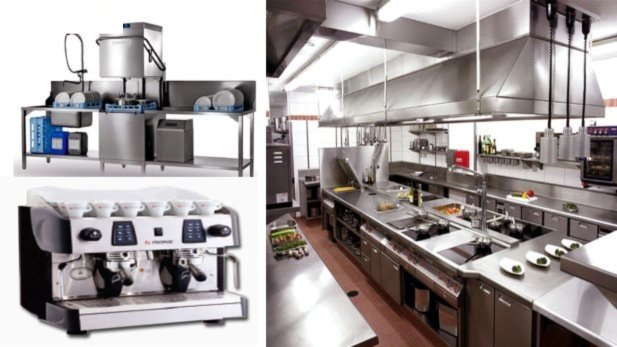
Cooking equipment forms the heart of any commercial kitchen. This includes gas ranges, induction cooktops, ovens, grills, fryers, tandoors, and steamers. These machines are designed to cook large quantities of food evenly and efficiently.
Food Preparation Equipment
Preparation equipment helps reduce manual labor and preparation time. Common examples include vegetable cutters, food processors, dough kneaders, mixers, slicers, grinders, and blenders. These tools improve consistency and productivity.
Refrigeration Equipment
Proper storage is crucial for maintaining freshness and preventing food waste. Commercial refrigerators, deep freezers, display chillers, walk-in coolers, and cold storage units help preserve ingredients and cooked food at the right temperature.
Dishwashing and Cleaning Equipment
Clean utensils and cookware are essential in any professional kitchen. Commercial dishwashers, sink units, garbage disposals, and grease traps help maintain cleanliness while saving time and water.
Storage and Utility Equipment
Storage racks, work tables, shelves, trolleys, and cabinets help organize the kitchen efficiently. A clutter-free workspace improves movement and reduces the chances of accidents.
Ventilation and Exhaust Systems
Proper ventilation removes heat, smoke, and odors from the kitchen. Exhaust hoods, chimneys, and fresh air systems create a comfortable working environment and improve safety.
How to Choose the Right Commercial Kitchen Equipment
Understand Your Kitchen Needs
Every food business has different requirements. A bakery will need ovens and mixers, while a restaurant may need grills, fryers, and refrigeration units. Choose equipment based on your menu and kitchen size.
Focus on Quality and Durability
Always invest in high-quality equipment made from food-grade stainless steel. Durable equipment performs better under heavy use and lasts longer.
Energy Efficiency
Energy-efficient machines help reduce electricity and gas bills. Look for equipment designed to consume less power without compromising performance.
Space Planning
Commercial kitchens often have limited space. Equipment should fit properly without disturbing workflow. Compact and modular designs help optimize space.
Easy Maintenance
Choose equipment that is easy to clean and maintain. Machines with easily removable parts reduce downtime and improve hygiene.
Benefits of Investing in Modern Commercial Kitchen Equipment
Modern kitchen equipment comes with advanced features that improve performance and convenience. Automated controls, temperature accuracy, faster cooking cycles, and improved safety features help kitchens operate smoothly even during peak hours.
Upgrading old equipment also enhances staff productivity and reduces stress in the kitchen environment.
Role of Commercial Kitchen Equipment in Business Growth
A well-equipped kitchen allows a business to handle higher order volumes without compromising quality. Faster service leads to satisfied customers, better reviews, and repeat business. Over time, this directly contributes to business growth and brand reputation.
For cloud kitchens and multi-outlet restaurants, standardized equipment ensures consistent taste and quality across all locations.
Conclusion
Commercial kitchen equipment is the foundation of any successful food service operation. From preparation to cooking, storage, and cleaning, every stage depends on reliable and efficient equipment. Investing in the right machines not only improves kitchen performance but also ensures safety, hygiene, and long-term profitability.