
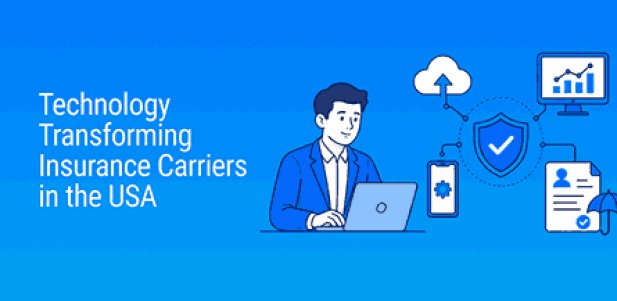

Insurance carriers in the United States are undergoing a structured digital transformation driven by regulatory complexity and operational scale. Traditional manual workflows are being replaced by automated systems that improve accuracy, compliance visibility, and operational efficiency.In modern insurance operations, technology plays a central role in managing producer data, licensing processes, and carrier compliance requirements across multi-state environments.
Transition from Manual Operations to Digital Systems
Many insurance carriers previously depended on spreadsheets, email-based approvals, and disconnected systems to manage operations. These manual processes often created inefficiencies, delays, and compliance gaps.
Digital transformation enables carriers to:
- Centralize operational data into unified platforms
- Improve workflow consistency and execution speed
- Reduce manual processing errors
- Enhance visibility across compliance activities
For insurance agencies, carriers, and MGAs, this shift is essential in regulated environments where accuracy is critical.
Automation in Producer Licensing Management
Producer licensing ensures that individuals are properly authorized to operate within regulated insurance frameworks. Managing this process manually increases the risk of delays and compliance issues.
Automation systems support carriers by:
- Verifying license status in real time
- Tracking renewals and expiration cycles
- Reducing manual verification workload
- Ensuring continuous compliance monitoring
Insurance compliance means meeting regulatory requirements consistently without operational gaps.
Carrier Appointment and Producer Code Tracking
Carrier appointment defines the formal relationship between a carrier and a licensed producer. Each producer is assigned a unique identifier known as a producer code.
A producer code is a unique identifier used by carriers to track producer activity and compliance status.
Modern systems enable:
- Structured appointment tracking
- Producer code assignment and validation
- Monitoring of producer lifecycle activity
- Audit-ready compliance reporting
Platforms such as Agenzee function as insurance compliance software that helps unify appointment tracking and producer management workflows.
Role of NIPR in Regulatory Compliance
The NIPR system is a critical component of insurance licensing infrastructure in the United States. It ensures standardized and verified producer data across states.
Integration with NIPR allows carriers to:
- Validate licenses instantly
- Reduce manual verification effort
- Improve regulatory reporting accuracy
- Maintain consistent compliance records
In multi-state operations, this integration is essential for maintaining alignment with state compliance requirements.
Artificial Intelligence in Insurance Operations
Artificial intelligence is increasingly used in insurance carrier systems to improve efficiency and decision-making. Instead of manual data review, AI analyzes patterns and detects operational risks.
AI applications include:
- Identifying compliance anomalies
- Predicting licensing or renewal issues
- Monitoring producer activity trends
- Supporting operational decision-making
These capabilities help carriers move from reactive compliance management to predictive oversight.

System Integration and Compliance Data Flow
Modern insurance carriers rely on integrated systems that connect internal platforms with external regulatory databases.
System integration helps:
- Eliminate duplicate data entry
- Improve consistency across platforms
- Strengthen reporting accuracy
- Enhance coordination between departments
Compliance teams often face challenges when systems are fragmented, making integration a critical requirement in regulated environments.
Operational Risks Without Automation
Carriers relying on manual systems face multiple operational risks:
- Delayed onboarding and workflow processing
- Inconsistent producer data management
- Increased compliance exposure
- Higher administrative costs
These risks become more significant in large-scale insurance operations across multiple jurisdictions.
Best Practices for Modern Insurance Carrier Systems
Regulatory requirements require structured and automated approaches to compliance management. Best practices include:
- Automating producer licensing workflows
- Integrating systems like NIPR for validation
- Centralizing producer code management
- Tracking carrier appointments digitally
- Reducing manual compliance dependencies
Many insurance organizations use compliance platforms like Agenzee to support structured automation in producer licensing and appointment tracking.
Conclusion: Future of Insurance Carrier Automation
Insurance carriers in the United States are evolving into fully digital ecosystems driven by automation, AI, and integrated compliance systems. These technologies improve operational efficiency, reduce compliance risk, and enhance regulatory alignment.Modern platforms such as Agenzee support this transformation by enabling centralized producer management, license tracking, and carrier appointment automation within a unified system.


































his is the right blog for anybody who desires to find out about this topic. You realize so much its virtually laborious to argue with you (not that I actually would need…HaHa). You definitely put a brand new spin on a topic thats been written about for years. Great stuff, just great! 소액결제 현금화