
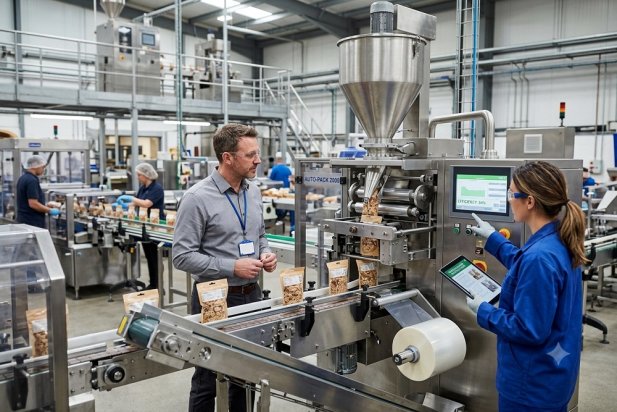

There is nothing worse than sending a cracking batch of artisanal meat pies out to the local servo, only for a dodgy seal to ruin them before they even hit the warmer. Talk about an absolute tragedy. In the food game, your equipment is your lifeline. Finding the perfect food packaging machine is easily the most critical choice you’ll make for your line. It is not just about containing the food; it’s about locking in that freshness. Let’s sort out how to make the right call.
Match the Machine to Your Product’s Physical Traits
Every food item behaves differently. A runny Aussie pasta sauce has absolutely nothing in common with a crunchy macadamia nut. That’s why you can’t just buy any random gear. You have to match the mechanics to the food’s state of matter.
For instance:
- Liquids And Pastes(sauces, spreads or dressings, for instance) will need a volumetric or piston-type filler to avoid drips.
- Solid Dry Foods or Granular Foods(nuts, crisps, beans or grains, for example) will call for multi-head weighers or auger fillers for precise measurements and for protecting them from being crushed.
Hygiene and perishability are not up for debate at all in this scenario. Fresh products, meat, and dairy need excellent hygiene and clean designs that can be easily sanitised. Consider the possibility of adding advanced options such as vacuum packing or Modified Atmosphere Packaging (MAP) to make use of shelf-life extension in a natural way while avoiding nasty preservatives. Finally, consider the temperatures. Does your machine handle boiling hot-fill products? Or maybe your machine will operate in a cold, humid environment?
Determine Your Output Volume and Level of Automation
Before pulling out the chequebook, look at how much food you're actually pushing out the door. Understanding why food packaging is important starts with knowing how fast you need to get fresh stock onto shelves.
Let’s break down where your business fits:
- Manual/Tabletop Machines: Ideal for budding companies making small batches of products right from their kitchens. The labour-intensive machines come at almost no cost.
- Semi-automatic Machines: Right for those expanding businesses that wish to increase production without investing too much in CAPEX (Capital Expenditure)
- Automatic Production Lines: Necessary for big businesses that need quick, efficient, and consistent production round the clock without much manual labour.
You'll need to calculate your current hourly and daily output requirements. But don’t just buy for today. Keep a buffer for future growth. Look for modular designs that you can upgrade later. It's a balancing act between CAPEX and OPEX. Sure, automation costs more upfront. But it slashes long-term labour costs and virtually eliminates human errors on the line.
Assess Packaging Material and Format Compatibility
You can't just expect any machine to handle every type of bag or box. Compatibility is everything. If you partner with a third-party food packing company or run your own facility, the physical packaging format dictates the machine you need.
Your machinery must match your specific package style:
- Stand-up pouches (with or without resealable zippers)
- Rigid trays (ideal for ready-made meals)
- Glass jars and bottles
- Cartons or cardboard boxes
- Shrink wrapping for multi-packs
Ensure the heat sealers or folding arms work perfectly with your specific material, whether that's polyethylene, foil, or paper-based structures. Don't ignore the sustainability factor either. Aussie consumers want green options. Modern packaging machinery needs to handle eco-friendly, biodegradable, or recyclable films without tearing the material or failing to seal.
Technical Integration and Maintenance Needs
Don't buy a massive machine if it won't physically fit in your shed. The footprint on your factory floor matters. You need enough workspace for operators to move around safely without tripping over cords.
Then, think about the rest of your line. A packaging machine doesn't live in isolation. It needs to play nice with other upstream and downstream equipment:
- Conveyors feeding the product in
- Metal detectors for safety checks
- Batch coders for expiry dates
- End-of-line labelling systems
Lastly, let's talk about sanitation. In the food world, it's all about keeping things spotless. You also want to look for heavy-duty stainless-steel construction (304 or 316 grade) and solid water-resistance ratings (IP ratings). This makes washdowns quick and easy, saving you hours of painful scrubbing.
Conclusion:
The correct selection of machines has nothing to do with purchasing a high-end model from a wide variety. It is all about balancing the specific features of your product, your output objectives, and your floor space. Take your time. Make a list of user needs and never test your machine without your own material. The difference will be clear to you soon enough.























The the next time I just read a blog, I really hope that this doesnt disappoint me approximately brussels. Get real, Yes, it was my option to read, but I really thought youd have some thing intriguing to say. All I hear is usually a couple of whining about something that you could fix when you werent too busy searching for attention. 소액결제 현금화