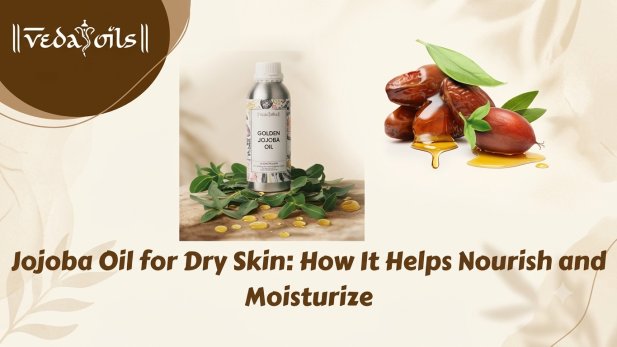

Dry skin can feel rough, tight, flaky, and uncomfortable, especially when exposed to dry weather, frequent washing, or harsh skincare products. A good moisturizing routine can help improve the appearance and feel of dry skin. Among natural skincare ingredients, jojoba oil is widely used because of its lightweight texture and moisturizing properties.
Derived from the seeds of the jojoba plant, jojoba oil has a wax-like structure that closely resembles some of the skin's natural oils. This makes it a popular ingredient in facial oils, moisturizers, body lotions, lip products, and other skincare formulations.
What Is Jojoba Oil?
Jojoba oil is obtained from the seeds of the jojoba plant, scientifically known as Simmondsia chinensis. Unlike many traditional vegetable oils, jojoba oil is technically a liquid wax. Its smooth texture allows it to spread easily over the skin without feeling excessively greasy.
It is commonly used in skincare because it can help support the skin's moisture barrier and leave the skin feeling soft and conditioned.
How Jojoba Oil Helps Dry Skin
1. Helps Moisturize the Skin
One of the main reasons people use jojoba oil for dry skin is its moisturizing effect. Applying a small amount to the skin can help reduce the feeling of dryness and leave the skin feeling smoother and more comfortable.
It can also be layered with a regular moisturizer as part of a daily skincare routine.
2. Helps Reduce Roughness
Dry skin can develop rough or uneven patches. The smooth texture of jojoba oil makes it useful for conditioning areas that feel particularly dry, such as elbows, knees, hands, and feet.
Regular use can help leave these areas feeling softer and smoother.
3. Supports the Skin's Moisture Barrier
A healthy skin barrier helps reduce excessive moisture loss and protects the skin from external environmental factors. Jojoba oil can be used as part of a moisturizing routine to help condition the skin and support its overall softness.
4. Lightweight and Easy to Apply
Although it provides a moisturizing feel, jojoba oil is generally lightweight and spreads easily across the skin. This makes it suitable for facial and body skincare when used in an appropriate amount.
A few drops are often enough for the face, while larger areas may require slightly more.
5. Suitable for Different Skincare Routines
Jojoba oil can be incorporated into different types of skincare routines. It can be applied on its own, mixed into a moisturizer, or used as an ingredient in homemade skincare formulations.
For people dealing with seasonal dryness, adding jojoba oil to a regular skincare routine may provide an extra conditioning step.
How to Use Jojoba Oil for Dry Skin
Using jojoba oil is simple. Start with clean, slightly damp skin and apply a few drops of jojoba oil to your fingertips. Gently massage it onto the face or other dry areas using circular motions.
For the best results, it can be applied after a water-based moisturizer. Using it after cleansing, particularly at night, can make it an easy addition to a nighttime skincare routine.
For larger areas of dry skin, such as the hands, legs, elbows, and feet, apply a small amount and massage gently until evenly distributed.
Jojoba Oil for Face and Body
Jojoba oil can be used on both the face and body. For facial skincare, start with a small amount to avoid an overly oily feeling. For body care, it can be applied to areas that commonly become dry, including elbows, knees, hands, and feet.
It can also be combined with body lotions or creams to create a more nourishing skincare routine.
Why Choose VedaOils Jojoba Oil?
Choosing a quality ingredient is important when adding natural oils to your skincare routine. VedaOils offers jojoba oil that can be incorporated into personal skincare routines and DIY beauty formulations.
VedaOils jojoba oil can be used for various applications, including moisturizing routines, body care, haircare, massage blends, and homemade skincare products. Its versatile nature makes it a useful ingredient for people who enjoy creating their own beauty formulations.
Tips for Using Jojoba Oil Safely
Before applying jojoba oil to your face or body, consider performing a patch test on a small area of skin. This can help you determine how your skin responds to the product.
Use a small quantity at first and increase it only if needed. Avoid applying oils to broken or irritated skin unless advised by a qualified healthcare professional.
If you have persistent dryness, redness, itching, or irritation, consult a dermatologist to identify the underlying cause.
Final Thoughts
Jojoba oil can be a useful addition to a skincare routine for dry skin. Its smooth texture and conditioning properties make it suitable for moisturizing and softening dry areas on the face and body. Whether used alone or combined with other skincare products, it can help create a simple and nourishing routine.
For those looking for a versatile natural oil for DIY skincare and everyday beauty care, VedaOils jojoba oil can be considered as part of a regular moisturizing routine.