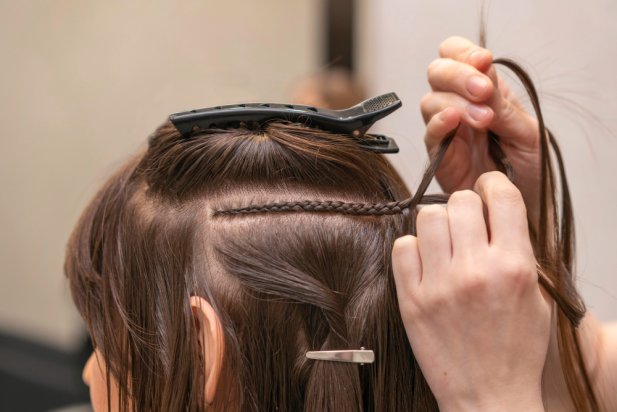

Ever spent a Sunday morning scrolling Instagram, staring at thick waves and thinking, right, I need that volume immediately? You are not alone.
But probably one of the scariest things is walking into a local beauty salon or purchasing hair extensions online blindly, with no idea what you're buying only to find your new set of extensions costs an arm and a leg, only to turn to a nest of rat's hair in a matter of a couple of weeks. With prices varying from a few hundred up to over a thousand, it is more than important to know exactly where to find real human hair extensions in Melbourne that look natural and feel soft and silky.
Marketing terms are heard without real understanding. Bags advertising "100% human hair" may sound appealing but have been known to really mean nothing of the sort. But how do you know the difference between good-quality hair ensnared in a trap of quick hair? Let's break down quality, ethical sourcing, application methods, and daily upkeep.
Cuticles and Drawing Types: What Makes Hair Last?
Here's the raw truth. One set of extensions might last two years, while another turns unmanageable after three washes. Why? It comes down to cuticle direction and manufacturing shortcuts.
The gold standard is genuine Remy hair.
If the hair is collected as Remy, each individual cuticle - the tiny scales that form part of its outside wall is aligned in one direction all the way from the roots to the ends. When cuticles are in contact, the hair runs smoothly like silk. Non-Remy hair is collected from salon floor sweepings or hairbrush waste where roots and tips mix up. To stop instant matting, factories strip cuticles with harsh acid baths and coat rough hair in synthetic silicone. It feels soft out of the package. Once that silicone washes down the drain? You are left with coarse hair that tangles if you look at it sideways.
Then there is structural density: single drawn versus double drawn.
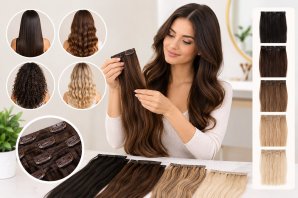
- Single drawn bundles contain strands of varying lengths, roughly 50 to 60 per cent full-length hair. The ends taper out naturally, working brilliantly if you have finer hair or want a soft, layered finish.
- Double drawn hair is hand-sorted to strip out shorter hairs, leaving 70 to 80 per cent of the bundle at full length. You get thick, blunt ends and maximum density right to the bottom, ideal for dramatic length and volume.
Sourcing Matters: Raw Origins and Fair Trade
It isn't just about how hair is built; where it comes from matters just as much. Raw materials like European, Russian, or temple-donated Indian hair are highly sought after because their texture and natural movement blend like a dream with Australian hair.
Sourcing in the Ethically Sourced Category describes donors who give hair freely; it can be sourced through religious temple traditions like tonsuring, or through fair trade foundations or cooperatives where communities or donors are fairly recompensed. Ethical hair is cold processed using an extremely mild bleaching process over several days, instead of being blitzed with harsh chemicals, and due to the internal protein matrix remaining unaffected, these smooth extensions can last up to 24 months. Consulting an experienced hair extension specialist in Melbourne guarantees the hair you buy is traceably sourced and ethically harvested.
Everyday Aftercare: Protecting Your Investment
Fitting your extensions is only half the battle.
First rule? Allow new bonds to set for 48 hours before shampooing your hair or working up a sweat.
As regards wash days, every 2 or 3 washes, use a dedicated sulphate-free shampoo and massage gently at the roots. Keep deep conditioners or masks well off the mid-shafts and ends, and be mainly wary of oils near the tape tabs or micro rings as they will slip right out. Always use low heat when blow-drying your extensions. Dry your extensions in their wet state. This is very important because the bonding sitting directly on your head will not adhere at all! Braid your hair up and sleep in a silk pillowcase so that you don't get any frizz from the friction. And finally, come to the salon every 4-8 weeks for weft or tape relocation.
Learning how to care for your hair extensions once you leave the chair keeps strands silky and protects natural hair from breakage.
Final Thoughts:
In the end, having luxury hair should be something to enjoy and not to stress over. With demand for authentic Remy hair, selecting the appropriate drawing density, promoting fair trading practices, and persevering with a firmly established maintenance system, your hair will finally be all your own.